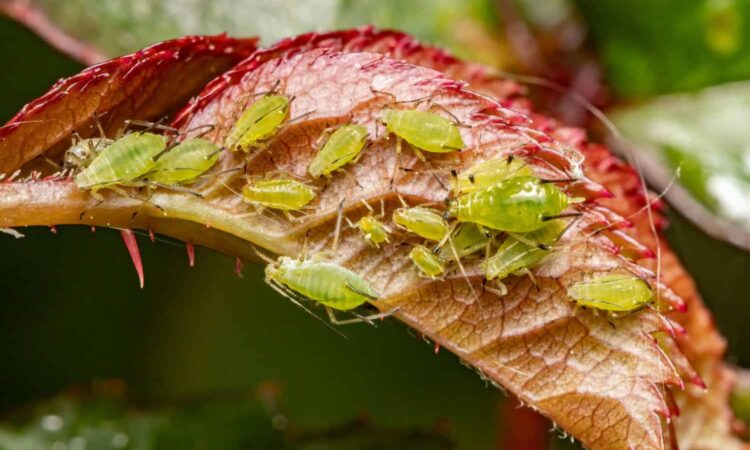
As any serious gardener will tell you, aphids are pests to plants and can become serious thorns in the side of a growing garden. Aphids may be small, but left to their own devices, they can utterly destroy large swaths of plants, be they crops or trees. They also act as potent vectors for plant viruses. Luckily for gardeners and farmers alike, these insects have a natural enemy in the ladybug. Ladybugs eat aphids with glee, and that makes people happy.
Ladybugs may be polka-dotted little marvels, famed for their sharp aesthetics and known as symbols of good luck, but people truly prize them for their appetite. These insects may be elegant, but many species are wolves in sheep’s clothing. While a minority of species feed on plants and can be considered pests, the vast majority of well-known ladybug species are predatory and feed on bugs like aphids. This makes them one of the more advantageous insects out there that gardeners routinely place in their gardens to combat aphid infestations. Let’s learn more about this dynamic, why ladybugs eat aphids, and how it benefits both gardeners and the environment.
Aphids
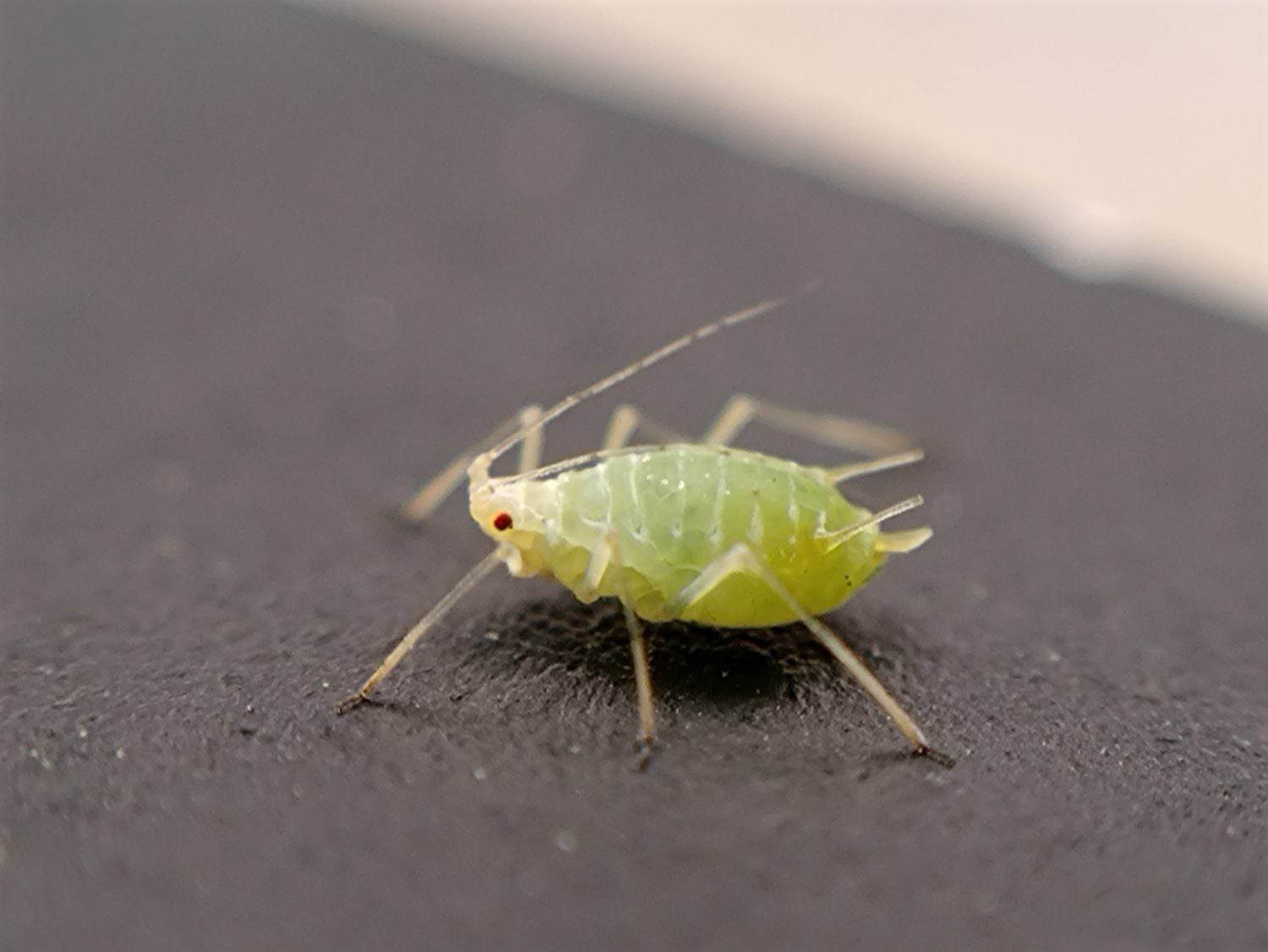
All Aphids belong to the Aphididae family of sap-sucking insects. Of the approximately 5000 species of aphids, however, only 400 of them feed on food and fiber crops. Given their common names like greenfly and blackfly, it’s clear that these insects come in a range of colors, including green, black, brown, pink, or nearly colorless. Typically, aphids have two antennae, compound eyes, long, thin legs, and mouthparts that pierce and suck on plant sap. While they are usually wingless, they are known to gain flight capabilities depending on the species and time of year.
They are tiny—only a few millimeters long each—and bunch up on plants. You’ve probably seen aphids collected on the undersides of flower buds or leaves without even realizing it. They may look innocuous, but they can be a scourge on plants. These aphid clusters suck out plant sap, curling leaves, wilting shoots, and stunting plants in the process. In sufficiently large groups, aphids can utterly debilitate healthy plants, effectively weakening their immune systems.
Honeydew
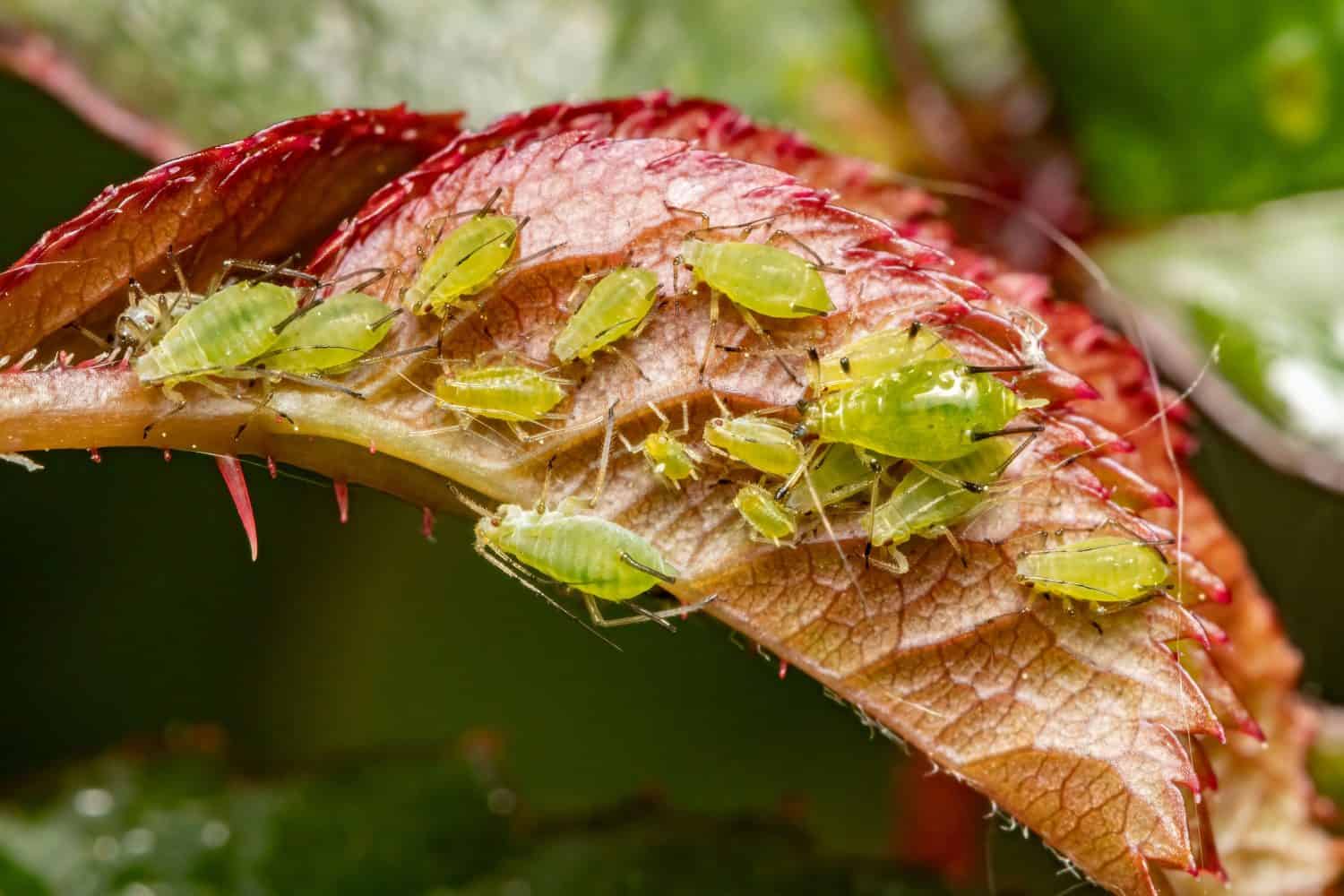
Sucking out nutrients is one thing, but aphids also excrete a sticky fluid called honeydew. The presence of this sugar-rich fluid has a twofold effect: it prevents plant leaves from engaging in photosynthesis, which encourages sooty mold growth. It also attracts ants. The ants love this honeydew so much, in fact, that it fuels a mutually beneficial relationship. Ants protect aphids in exchange for their sugar liquid excretions.
Having biological bodyguards allows aphids to operate relatively unchecked. Plus, females can reproduce asexually. In turn, aphid populations grow rapidly. This makes them a serious headache for both gardeners and farmers. There are several methods to combat infestations, including soap spray and water jets, but these strategies are only so effective. Plus, aphids congregate on the underside of leaves, so they are shielded from insecticide sprays falling from above. Luckily, there is a natural way to combat aphid problems.
Ladybugs
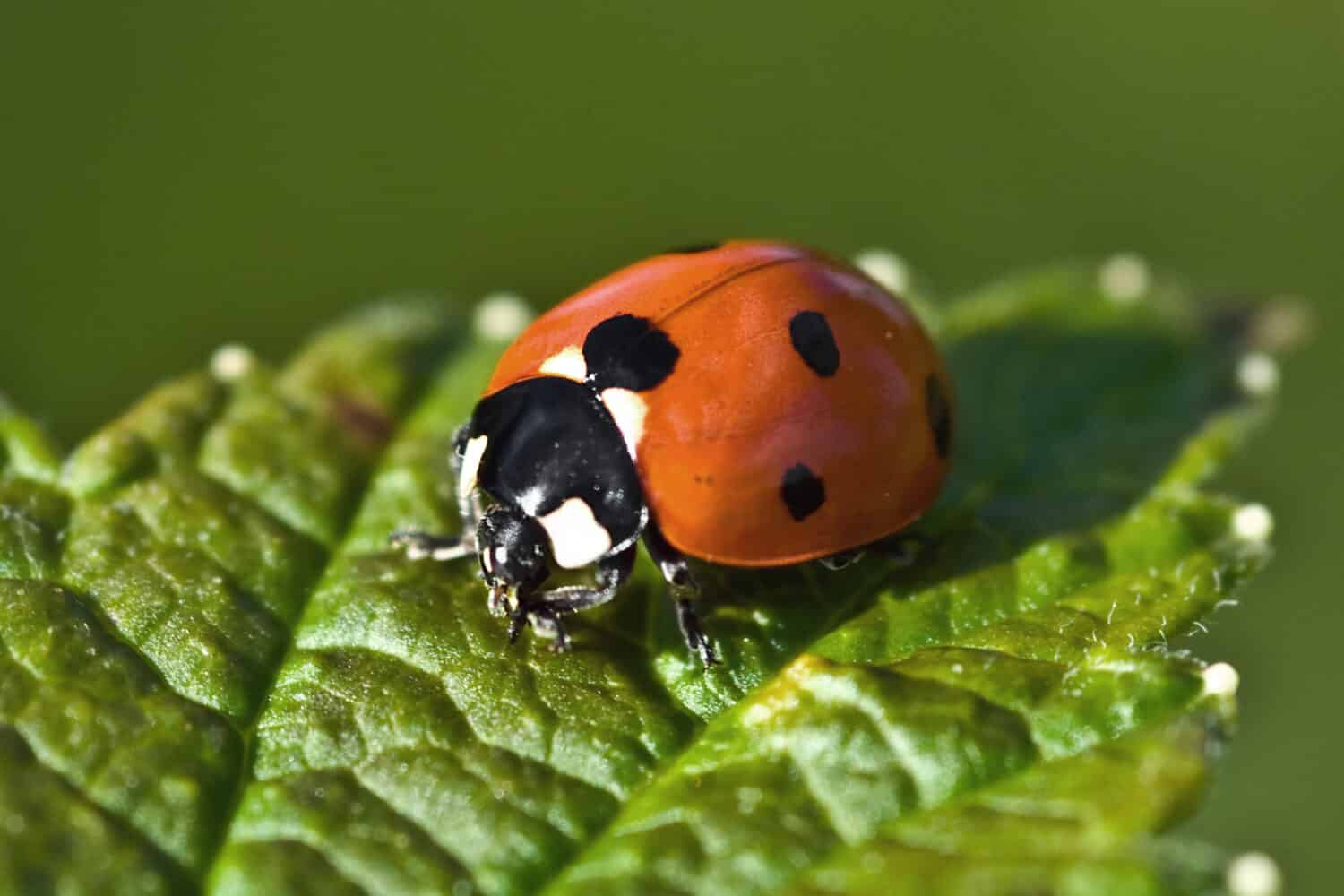
Coccinellidae is a relatively ubiquitous family of beetles containing over 5,000 species. Best known as Ladybugs or Ladybird beetles, these insects are generally characterized by compound eyes, clubbed antennae, and short legs. Ladybugs are best known, however, for their oval body shapes featuring domed backs and flat undersides.
Their domed backs usually have vibrant, distinct colors and patterns. Some are bright red with black spots, some are yellow with black spots, and others, like the backs of Brumoides suturalis, are brownish-yellow with long black stripes. Not only do these fanciful colors serve as warnings to would-be predators, they also function as camouflage. They even regulate temperature.
The diet of ladybugs depends on the species. Some of these beetles are carnivorous and predatory, while others are plant-eaters and therefore, pests. It really depends on the region, too. A 2009 study found that about 68% of ladybug species in temperate regions are aphid-eaters, while only around 20% of species in non-temperate regions eat aphids. For those types of ladybugs that do eat aphids, however, there are some special attributes that make them particularly good agents of agricultural pest control.
How and Why Ladybugs Eat Aphids
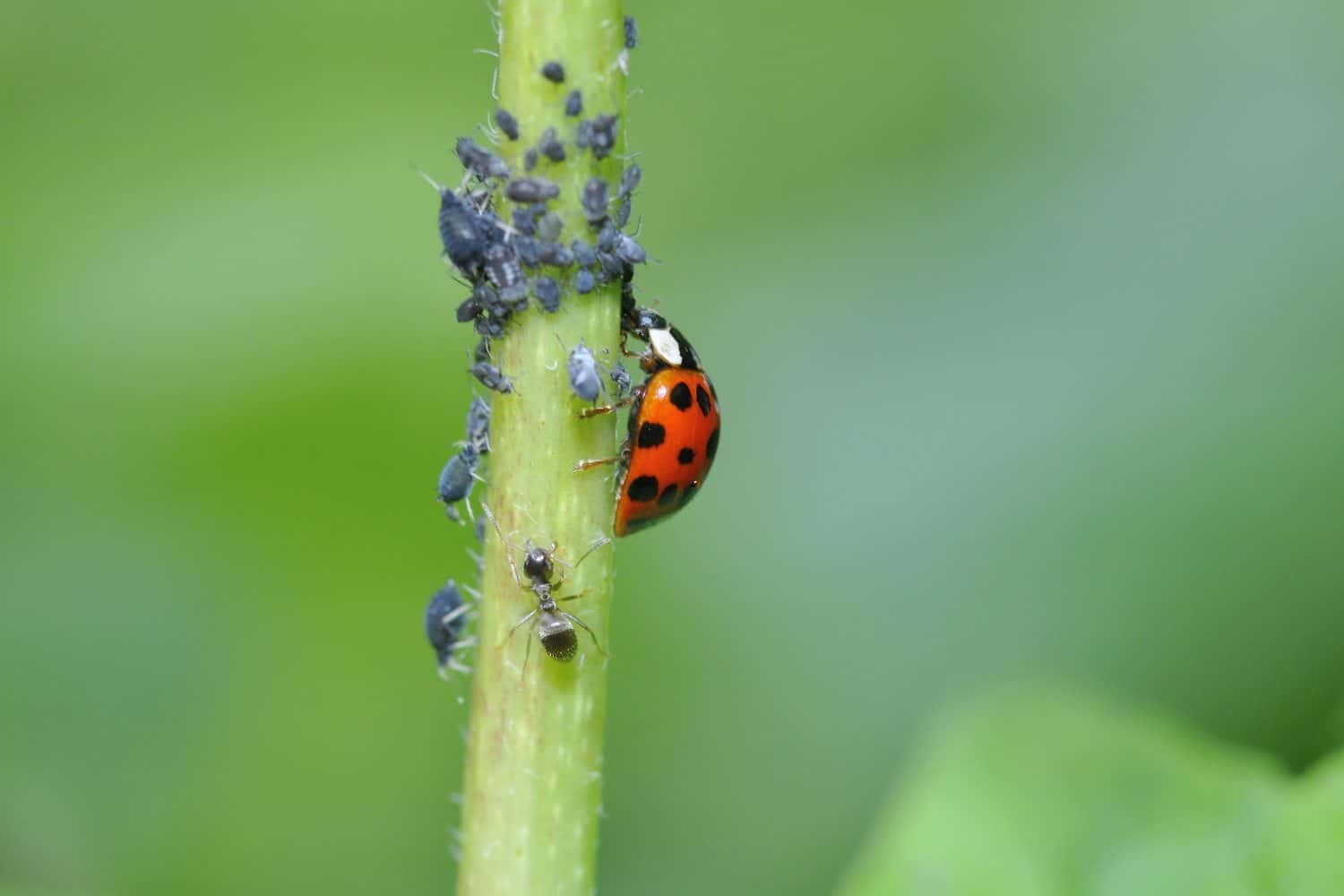
Ladybugs that eat aphids have several advantages for finding these sap-sucking insects. Aphids exude a pheromone when threatened that clues ladybugs into their location. They follow these chemical signals to the largest clusters of aphids in a group of plants and chow down. Thanks to specialized mouthparts, ladybugs can easily eat 50 or more aphids a day.
Unlike other insects, their larvae eat the same foods as mature ladybugs. To increase their odds and nutritional chances, ladybugs will lay their eggs in close proximity to aphid clusters. Upon hatching, the starving larvae will immediately feast on the nearby aphids. While adult ladybugs can eat 50 or more aphids a day, a single ladybug larva can eat about 400 in the three weeks before pupating into maturity.