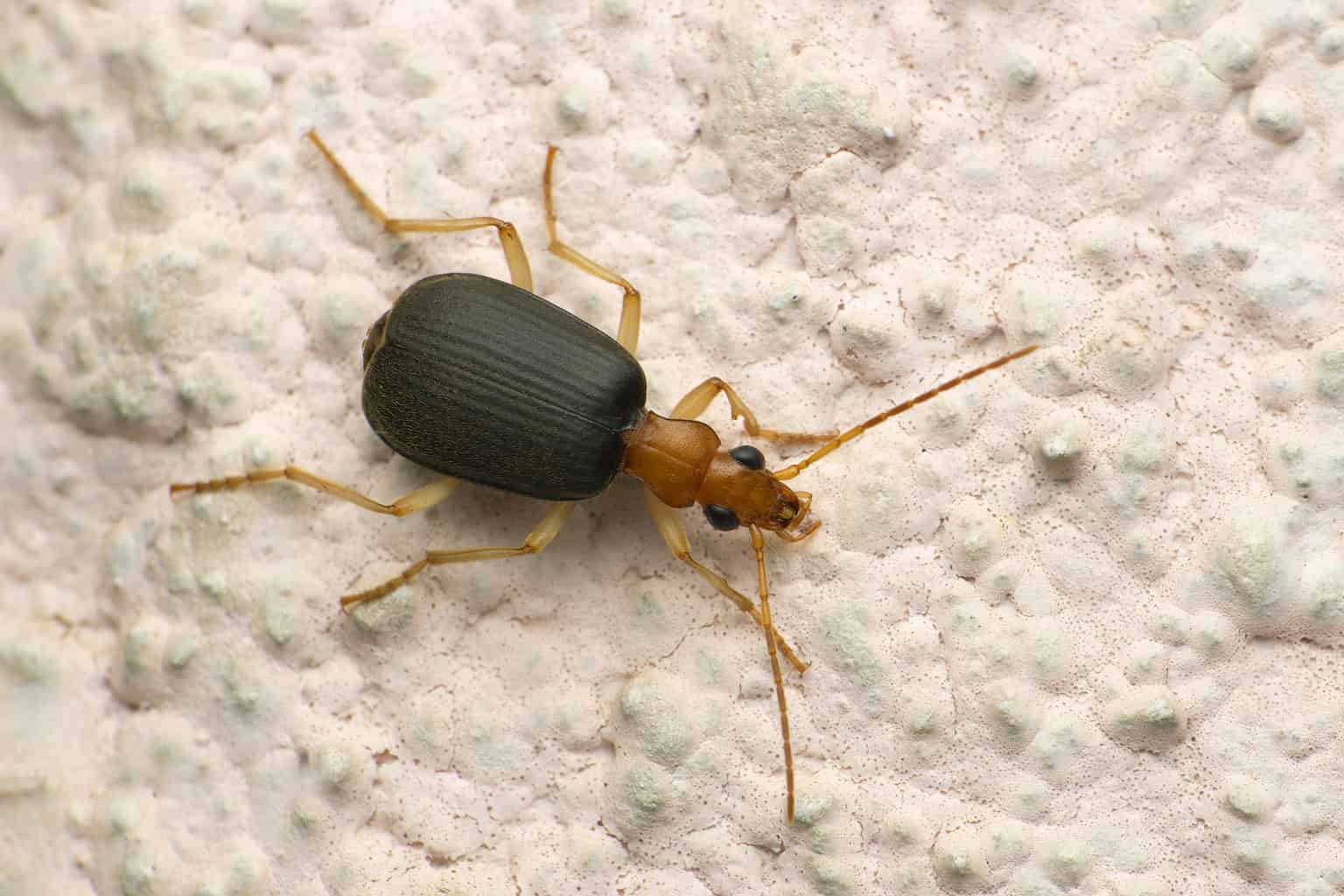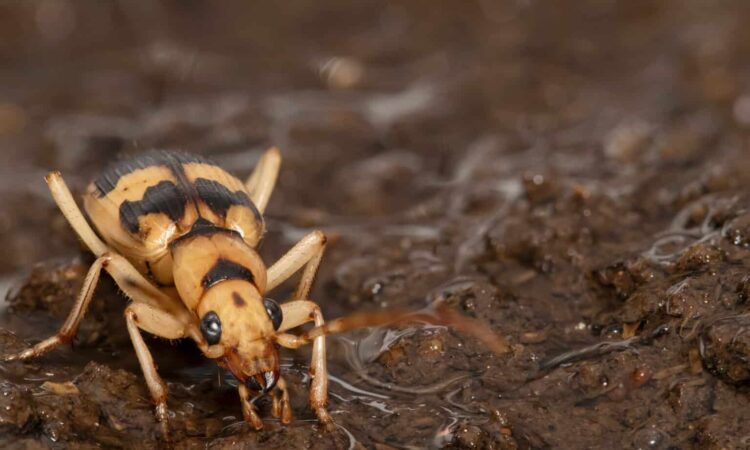
Bombardier beetles belong to the ground beetle family Carabidae. Scientists recognize over 500 individual bombardier beetle species belonging to four separate tribes. While they vary in size and color, all bombardier beetles share a similar defense mechanism. When threatened, bombardier beetles eject a caustic chemical solution from their abdomens. Some species can spray this compound at attackers and even kill small insects with their acid.
5 Bombardier Beetle Facts
- A bombardier beetle’s acid consists of two compounds – hydroquinone and hydrogen peroxide.
- The heat produced by the chemical reaction inside a bombardier beetle’s stomach can reach nearly 212 degrees Fahrenheit.
- Some bombardier beetles can direct their acid in a nearly 270-degree range of motion.
- Bombardier beetles can survive getting eaten by toads and frogs, as they use their noxious acids to entice their attackers to regurgitate them.
- On average, a bombardier beetle can fire its acid around 20 times before it runs out of chemicals and needs to recharge.
Species, Types, and Scientific Name
Bombardier beetles belong to the ground beetle family Carabidae. The word Carabidae derives from the Greek word karabas, meaning “horned beetle,” and the Latin ending –idae, meaning “resemblance.” Scientists currently recognize approximately 500 different bombardier beetle species. These species fall into one of four tribes – Brachinini, Paussini, Ozaenini, or Metriini. Each tribe contains numerous genera, which each, in turn, contain one of more associated species. Meanwhile, bombardier beetles get their common name from their unique habit of spraying noxious chemicals when threatened. The term bombardier traditionally refers to a crewmember of a bombing plane responsible for operating the bombsight and bomb release mechanism. A bombardier beetle’s ability to fire noxious acid somewhat resembles a bombardier’s role of releasing bombs on enemy targets, hence the name.

Appearance: How to Identify
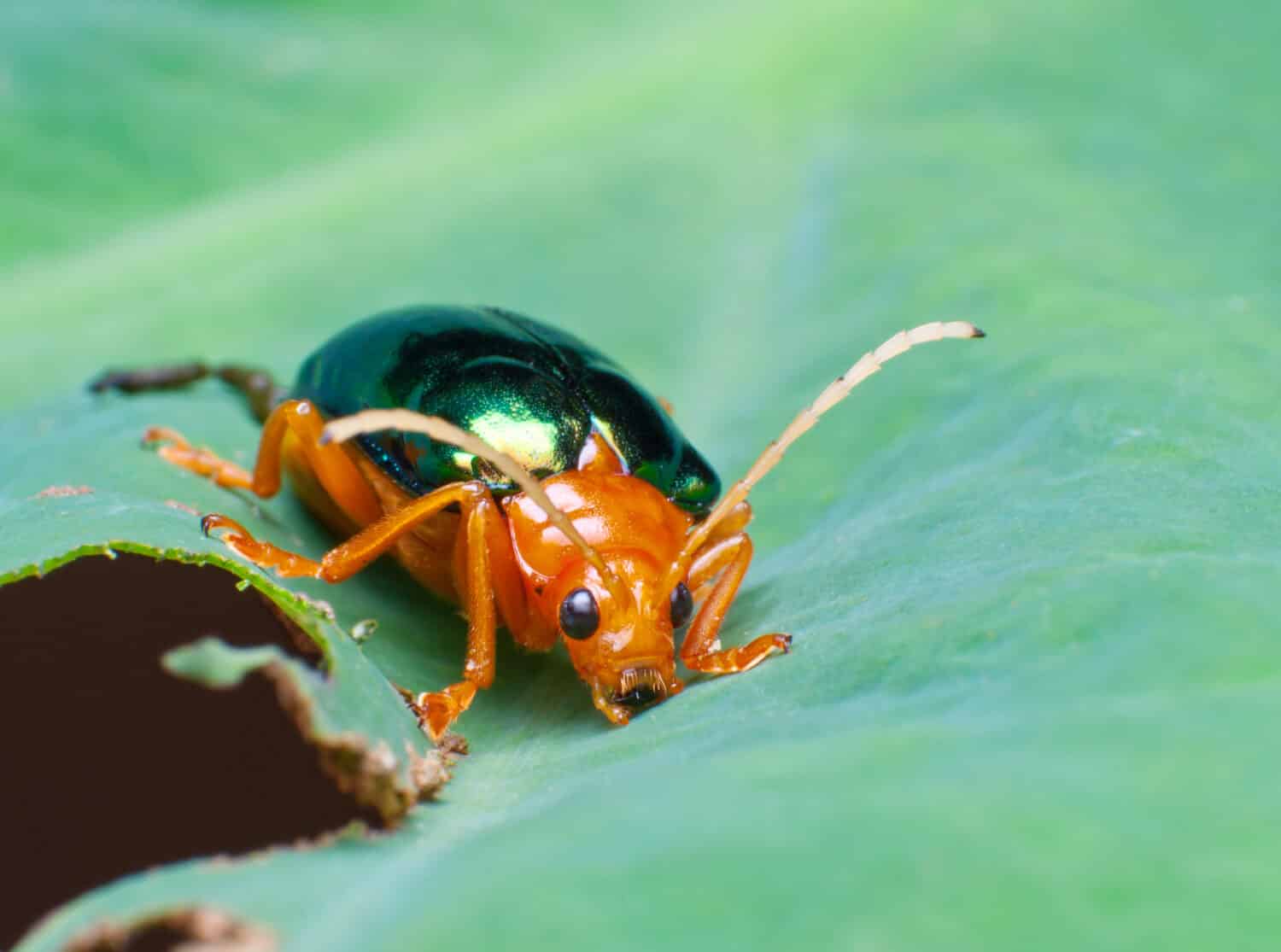
Bombardier beetles vary in appearance depending on the species. That said, they typically share a number of similarities. The majority of bombardier beetles are quite small, with most measuring between 5 and 13 millimeters long. However, some species can grow to around 1 inch long. They normally possess elongated abdomens and comparatively small heads. They vary in color but often feature reddish heads and legs and blue, black, or green wing coverings.
Bombardier beetles possess two glands near the end of the abdomen. These glands consist of walled vestibules connected to a reservoir that contains an aqueous chemical solution. This solution is made up of hydrogen peroxide and hydroquinones. When threatened, bombardier beetles can open the valve connecting the reservoir containing the chemical solution to the vestibule. The secretory cells lining the vestibule walls cause the hydrogen peroxide in the solution to oxide. This oxidation triggers a chemical reaction that causes the temperature in the vestibule to rise rapidly. The buildup of heat and pressure forces the valves close, which protects the bombardier beetle’s internal organs.
Once the pressure reaches a tipping point, it ejects from the beetle’s abdomen in either a foam or liquid spray. The ejection is often accompanied by a small popping sound similar to a tiny explosion or gunshot. While most bombardier beetles merely face their abdomen toward a potential threat, some African bombardier beetles can swivel their abdomens around 270 degrees to face a target.
Habitat: Where to Find Bombardier Beetles
You can find bombardier beetles on every continent on Earth except Antarctica. Their preferred habitats include grasslands, woodlands, and forests. They also frequently live along the edges of lakes, ponds, and rivers. These regions provide the beetles with both cover and access to plenty of food. While they can live in deserts and savannas, they prefer temperate environments, as their eggs require moisture to survive. You can normally find them on the ground or on trees at night. Meanwhile, they typically retreat to cover during the day, hiding under leaf debris, logs, or rocks. While some species feature colored markings on their wing coverings, others lack any markings. Like other beetles, they possess a pair of antennae and 6 legs.
Diet: What Do Bombardier Beetles Eat?
Bombardier beetles are carnivores that prey on other, smaller insects. They are solitary hunters that almost exclusively hunt at night. Despite what you may think, they do not use their acidic spray to subdue prey. Instead, they tend to target vulnerable prey, such as the larvae of other insects. You can find bombardier beetles hunting on the ground or in trees. They also frequently hunt in the bodies of dead animals. Animal carcasses often contain larvae of various insects, which make great targets for bombardier beetles. Common prey include moth larvae as well as the larvae of other beetles. Bombardier beetles locate prey using a combination of sight and touch. They possess sensitive antennae and hairs along their body to detect the presence of other insects.