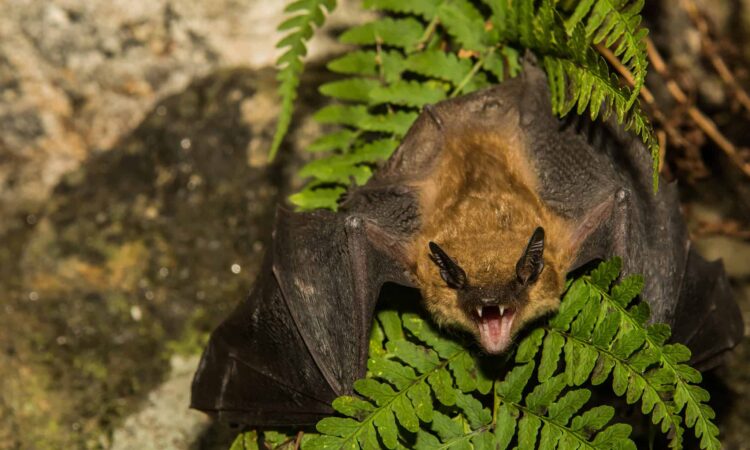
Bats are fascinating creatures and are the only true flying mammals. There are over 1,500 species worldwide, so they account for around 20 percent of all mammals! You will find them almost everywhere in the world, with the exception of the Arctic, Antarctica, and some isolated islands. Their eyesight is similar to ours, but they possess another remarkable ability called echolocation, which allows them to use sound to navigate their surroundings. Here we will explore this ability in more detail and list the bats with the widest echolocation ranges.
What Is an Echolocation Range?
Firstly, let’s clear up a few things about echolocation. Not all bats have the ability to echolocate, but around 70 percent of known species do. What’s more, bats are not the only animals with this ability. It is also used by whales, dolphins, and shrews, to name just a few.
When bats echolocate, they emit a high-frequency sound wave through their mouth or nose. The sound waves bounce off obstacles in their vicinity and enter back through their ears. Bats’ brains use these reflected sound waves to build up a picture of their environment. It helps them find food and stops them from bumping into things in the dark. An essential requirement for a nocturnal animal!
You will not be able to hear the sounds that bats emit for echolocation because they are at frequencies outside of a human’s range of hearing. The frequency of a sound wave, also known as pitch, is the number of times the pressure wave repeats itself per second. The closer together the waves, the higher the pitch. The frequency of sound waves is measured in Hertz (Hz). One Hertz is one sound wave cycle per second. Humans with normal hearing can detect sounds in the range 20 Hz and 20,000 Hz. Dogs can hear sounds of up to 45,000 Hertz. Bats, however, can detect sounds with much higher frequencies.
So, let’s meet the bats with the widest echolocation ranges. When considering the list, it is important to understand that echolocation calls can be frequency modulated (FM), which means that the pitch is varied during the call. Alternatively, it can be at a constant frequency (CF). Therefore, the widths of echolocation ranges are not straightforward to rank. FM calls are best suited for close, cluttered environments, while CF calls are more effective in open environments.
Distinctive Bat Calls
Bats can change their calls for different purposes. For example, several species exhibit what is termed a “feeding buzz”. This is when a bat produces a rapid series of calls to pinpoint the exact location of its prey. It is a way of homing in on a particular location and is also called the “terminal buzz” because it is produced just before the attack on the prey is launched. During this stage of an attack, calls at rates of above 100 calls per second are recorded. Bats have super-fast laryngeal muscles that allow them to produce these very special sounds.
Overall, the peak frequency in echolocation varies from 9 to 212 kHz. However, different bat species have distinctive bat calls. As well as the FM and CF calls described above, there are hockey stick calls. These start with an FM call but end with a CF element. Pipistrelle bats are one of the species that use this type of call.
Bat Social Calls
In addition to using sound waves for echolocation, bats also make noises for social calls. These are generally longer, more broadband, and highly complex sounds. Also, humans can hear some of them! If you stand near a bat roost, you will hear a series of chirps, cheeps, trills, and buzzes. These social calls are used to coordinate a social group when hunting, to keep track of other bats, and even to identify specific individuals in some species. Some bats even use sound to convey aggression!
Here are the bats with the widest echolocation ranges.
5. Common Pipistrelle Bat (Pipistrellus pipistrellus)
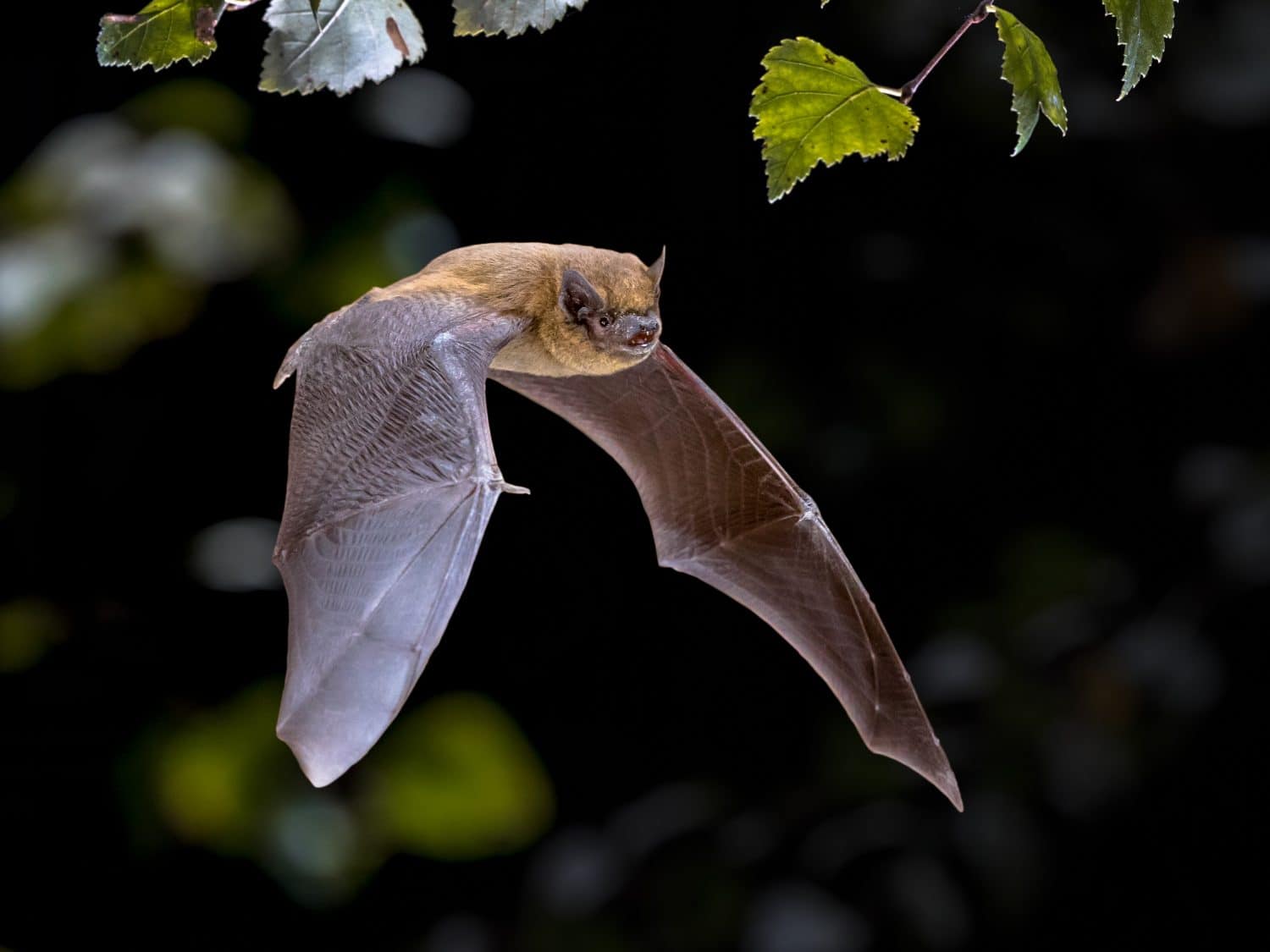
Common pipistrelle bats are found throughout Europe, and their range extends eastward through Asia to China and perhaps Korea, Japan, and Taiwan. They are a common sight in towns and cities and are also found in parks and forests. These bats have dark, golden-brown fur, but their underside is slightly paler. Their wingspan is around 7.5 inches, and they weigh less than a quarter of an ounce!
These bats feed on mosquitoes, moths, and other insects, which they find using their echolocation. They make fast and jerky movements when they are in flight as they dart around hunting on the wing. One of their calls lasts for 4 ms and is in the range 80-58kHz. A longer duration call, which lasts for 10ms, is at 51 kHz. Other sources give their echolocation range, as recorded using a bat detector (heterodyne), as between 45 and 70kHz, giving a range of 25 kHz
4. Soprano Pipistrelle Bat (Pipistrellus pygmaeus)
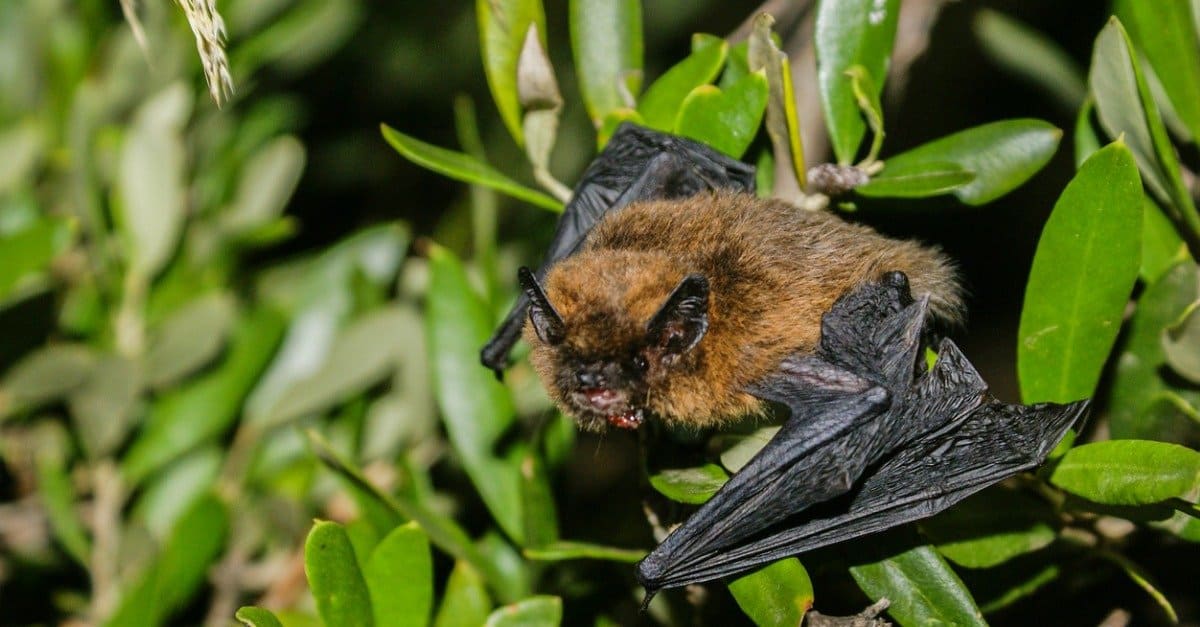
The soprano pipistrelle bat is very similar to the common pipistrelle, and they were only identified as two separate species in the 1990s. The easiest way to tell them apart is by their echolocation ranges! Soprano pipistrelles generally feed in wetland habitats such as over lakes and rivers. They also catch and eat the insects on the wing. In the summer, they tend to roost in crevices on newer buildings, including between roofing felt and roof tiles. The females form maternity colonies in the summer, while the males roost on their own or in small groups. Sometimes, they can be found roosting in tree holes and crevices.
Using a heterodyne, their echolocation calls can be picked up at between about 55 and 80kHz, giving a range of 25 kHz. They sound like a series of clicks at the upper part of the range and more like slaps at the lower part.
3. Mexican Free-Tailed Bats (Tadarida brasiliensis)

The Mexican free-tailed bat is found in North, Central, and South America. They inhabit caves, abandoned mines, bridges, and culverts. Their colonies are large and can reach hundreds of thousands of individuals. These are small bats (around 0.4 ounces) with short, dense fur, large but rounded ears, and wrinkly upper lips.
Mexican free-tailed bats primarily feed on moths but will also eat beetles, ants, and flies. Their echolocation calls are highly variable depending on their habitat and weather conditions. Their range is cited as between 20 and 75 kHz, giving a range of 55 kHz.
2. Big Brown Bat (Eptesicus fuscus)

Big brown bats are found in cities, towns, and rural areas from southern Canada, through temperate North America, down through Central America to extreme northern South America, and the West Indies. The females form maternal colonies to raise their young, but the males roost alone or in small groups. They use echolocation to avoid obstacles and to find insects to feed on in vegetation.
They emit a frequency-modulated (FM) biosonar sound of between 20-100 kHz, giving a range of around 80 kHz.
1. Greater Mouse-Eared Bat (Myotis myotis)
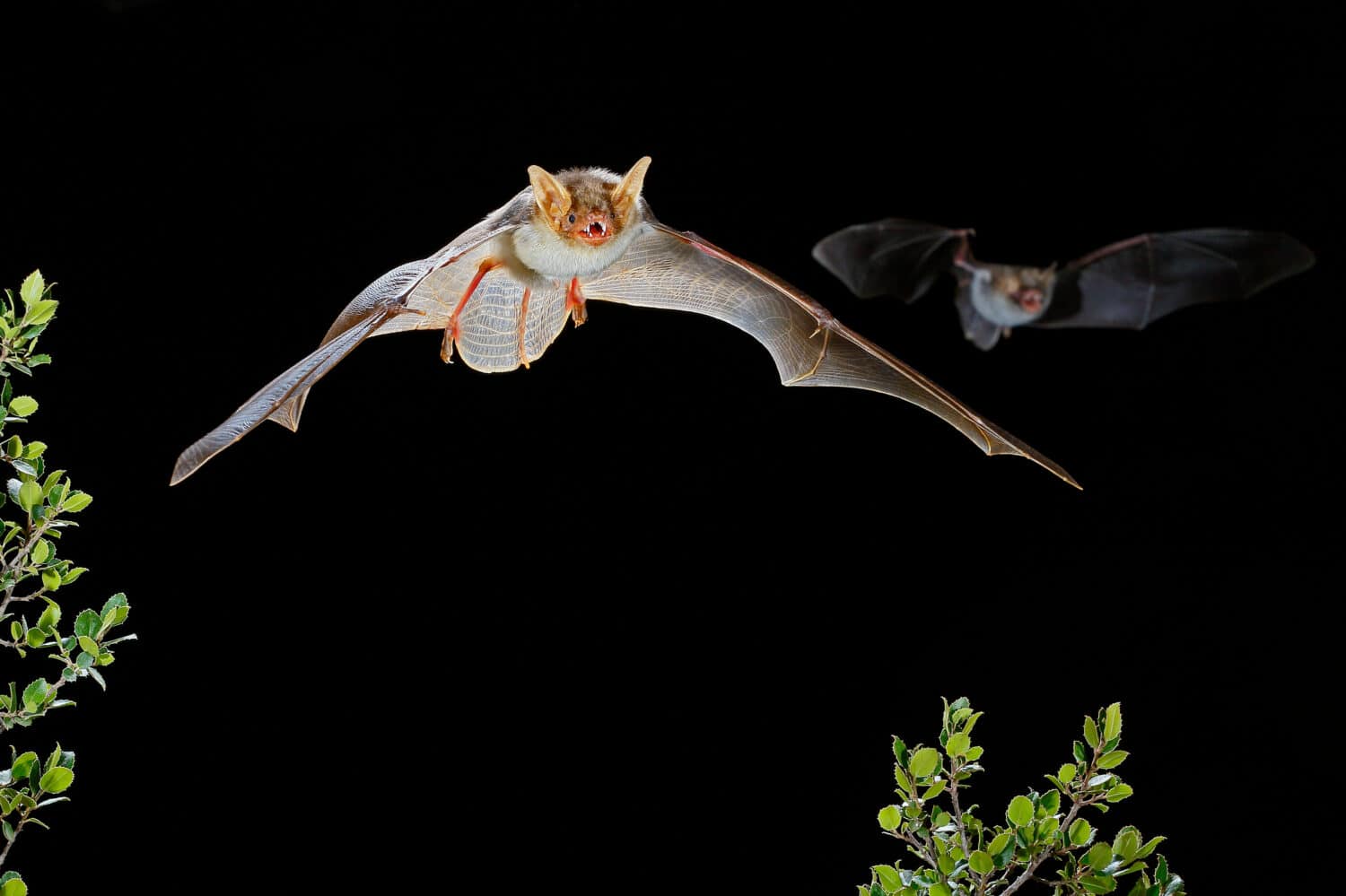
This larger bat species has a body length between 1.5 and 2.6 inches and weighs between 0.7 and 1 ounce. Their ears are relatively long, and their snout is particularly pronounced. The fur on their back is a brown-red color, but their undersides are white-gray. Their wings are gray or dark brown. These are European bats; the northern limit of their range stretches across south of the Netherlands, Germany, Denmark, Poland, and Ukraine. Breeding colonies are found in abandoned buildings and attics, as well as occasionally underneath bridges. In some parts of the Mediterranean, however, they primarily breed in caves.