5 Interesting Horned Lizard Facts!
Here are a few interesting facts about these lizards:
- There are 21 species of horned lizards in the world. Some of them include the Texas horned lizards, short-horned lizards, and mountain horned lizards.
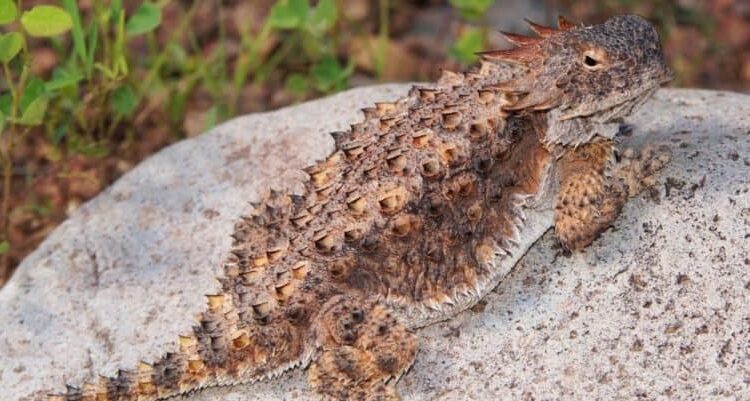
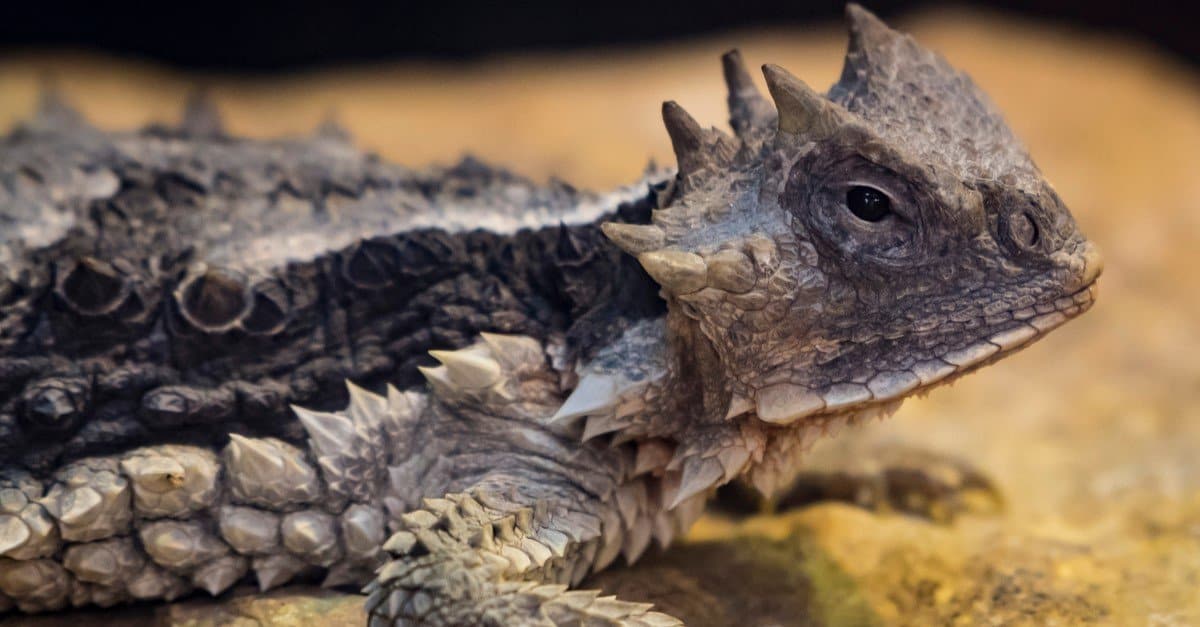
- These lizards have horn-like structures all over their bodies, especially around their head.
- Horned lizards camouflage into the landscape as one of the adaptations to conceal them from predators.
- They are known to live in a variety of habitats – from deserts to dense forests. They require a semi-arid environment to thrive.
- Most horned lizards live at least five years.
Scientific Name
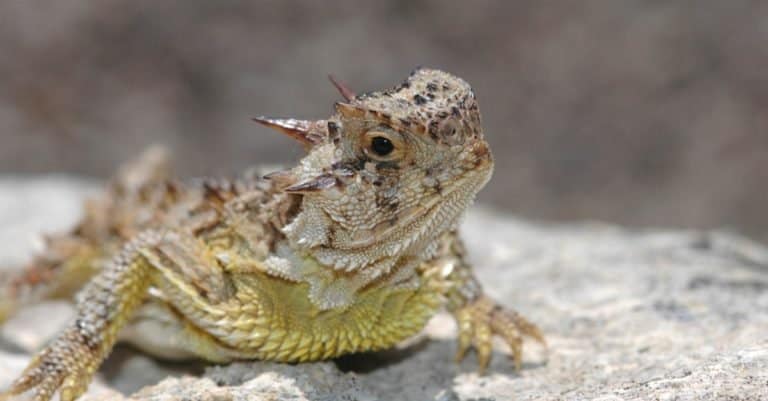
Horned lizards have been given the scientific name Phrynosoma. They are members of the Phrynosomatidae family in the order Squamata. The literal translation of “Phrynosoma” is “toad-bodied,” referring to their wide midsection.
Evolution
All reptiles came from the same ancestors during the Carboniferous Period, 300 – 350 million years ago. Hylonomus, the oldest known fossil of a reptile, is believed to be 315 million years old. There are lizards all over the world that have adapted to habitats that are as varied as the thousands of species within this family.
Species
There are 21 species of horned lizard including:
- Giant horned lizard (Phrynosoma asio) – endemic to the Pacific coast of southern Mexico, this lizard is the largest of the different species and is the only one that is shaped like a typical lizard.
- Baur’s short-horned lizard (Phrynosoma bauri) – can be found all over the United States.
- San Diego horned lizard (Phrynosoma blainvillii) – also called Blainville’s horned lizard, this species is native to southern and central California in the U.S. and northern Baja California in Mexico.
- Short-tailed horned lizard (Phrynosoma bracconnieri) – endemic to Mexico, this species has a shortened tail which is not always visible.
- The Great Plains short-horned lizard (Phryonosoma brevirostris) -is native to Canada and the United States.
- Cedros Island horned lizard (Phrynosoma cerroense) – can only be found on Cedros Island in Mexico.
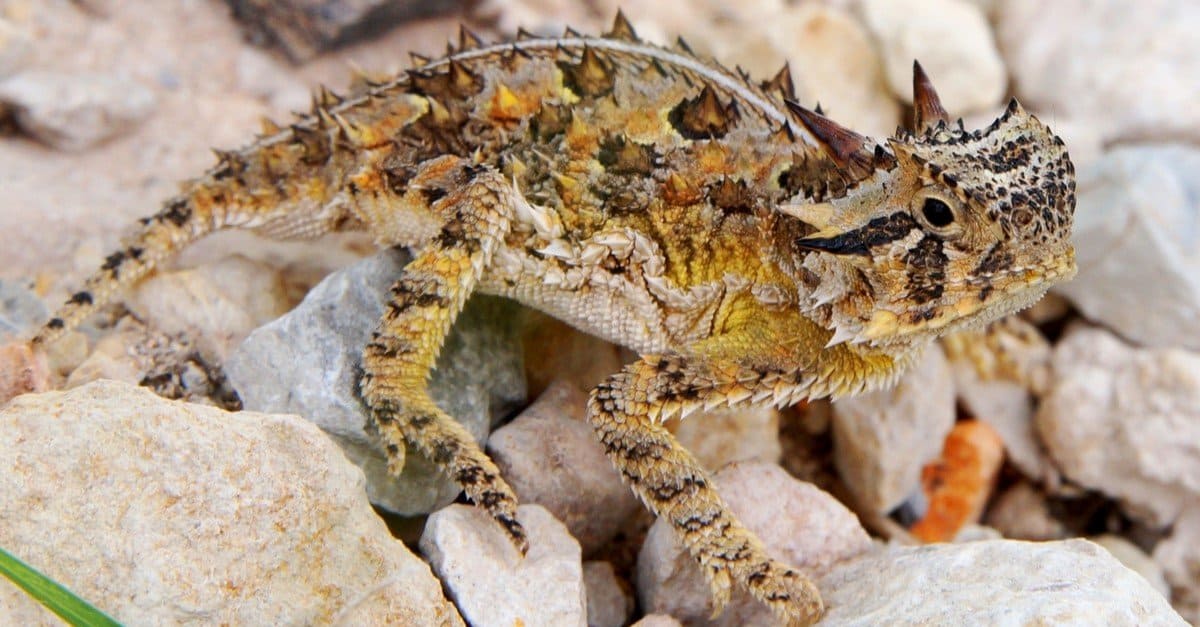
- Texas horned lizard (Phrynosoma cornutum) – can be found in south-central regions of the U.S. and northeastern Mexico as well as some isolated populations in the southern United States.
- Coast horned lizard (Phrynosoma coronatum) – endemic to Baja California Sur in Mexico, this species can shoot high-pressure streams of blood out of its eyes when threatened.
- Phgmy short-horned lizard (Phrynosoma douglasii) – often called a “horny toad,” this species is native to the northwestern United States and adjacent southwestern Canada.
- Rock horned or Ditmars’ horned lizard (Phrynosoma ditmarsi) – is endemic to the Mexican state of Sonora. It has the shortest horns of all of the species and only lives in thorn-scrub and deciduous Sinaloan woodlands.
Horned Lizard Appearance
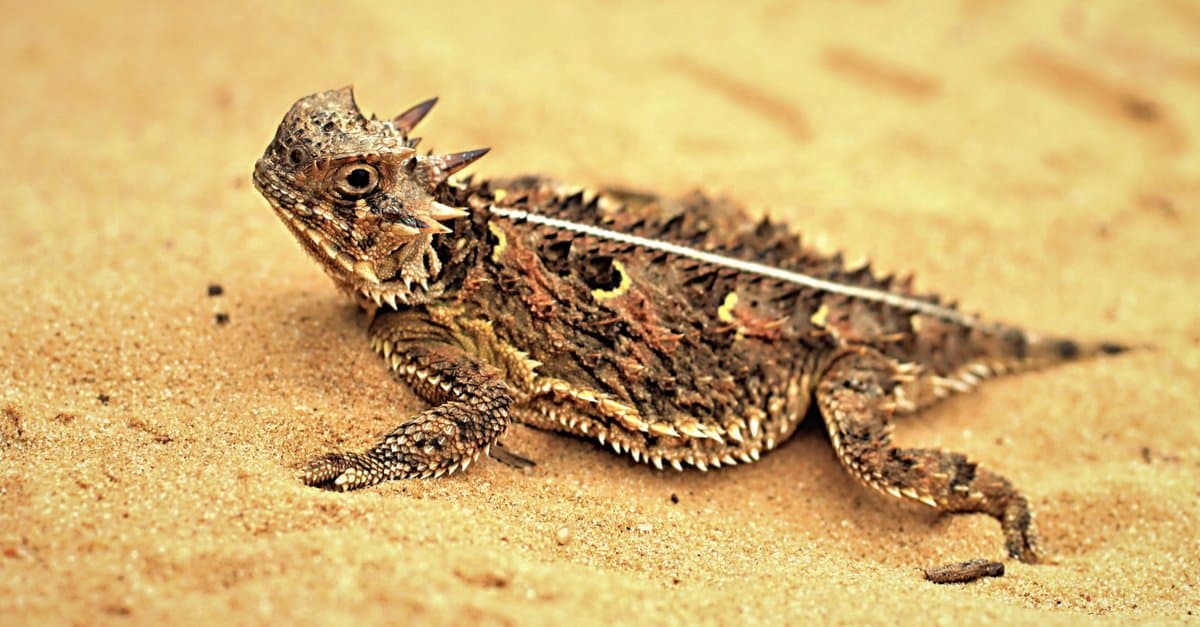
There are 21 species of horned lizard and while each has its specific features, the one thing that remains common in all of them is the armor of horns. These toad-shaped lizards, as the name suggests, are covered in horn-like scales that make them appear impalatable to predators. The largest of the horns usually rests on their heads – while two of them are on their brows, and many protrude from their jawline going up to the skull’s temporal portion. Two rows of horns or spikes run along the lateral portions of their torso and separate the larger spikes on their dorsal side from their scaly underbelly.
The species vary in size with the snout-vent length of the female Texas horned lizard, for instance, measuring about 5 inches while the male is only around 3 inches long. Female horned lizards are usually larger than males.
Behavior
Horned lizards are solitary creatures and are normally active between 60 to 80 degrees Fahrenheit, which is why they thrive in so many environments across North American and Central America. During summers or otherwise hot days, they are mostly active during the morning hours and become less active during the afternoon. They usually prefer soft, sandy soils near rocks. This usually allows them to smoothly blend into the landscape to avoid catching the eyes of their many predators.
The Texas horned lizards, for, example, can be found lying on open grounds during mornings and evenings. They tend to bask in the sun while hunting for insects – ants being their favorite food.
Some horned lizards hibernate from October till late March. Soon after horned lizards come out of hibernation, the mating season takes place. The male lizards call the female lizards by bobbing their heads and doing push-ups to signal that they are ready for mating.
Habitat
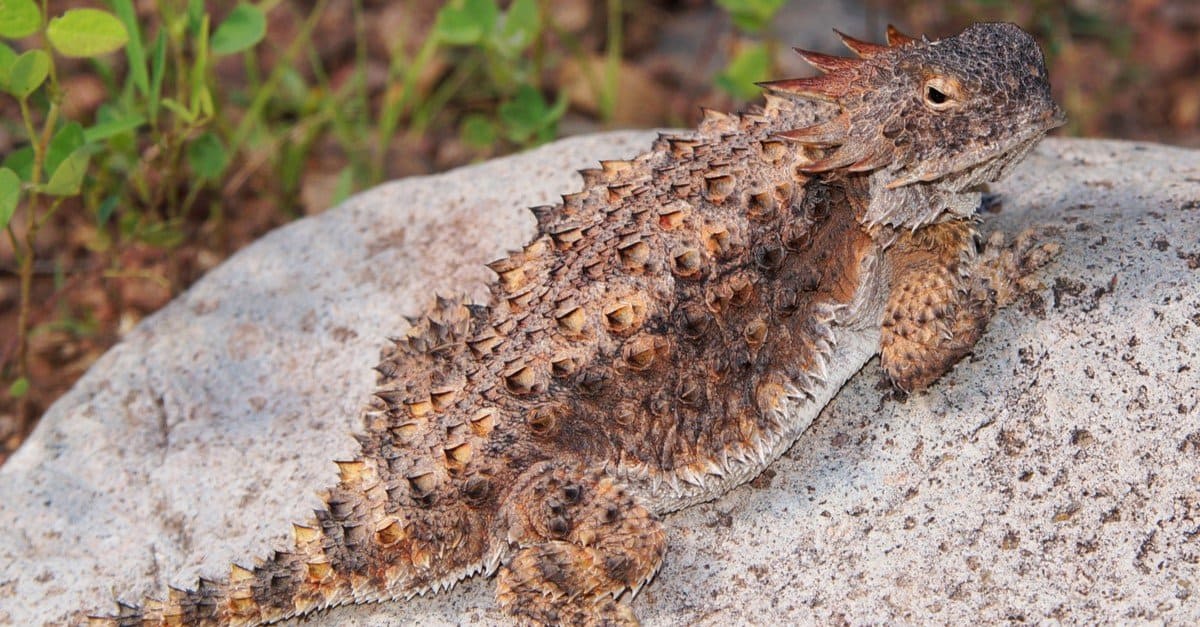
Horned lizards are found in the Sonoran Desert region. They are found throughout the area from near sea level up to 11,300 feet or 3340 meters. Some of the species of these lizards like the round-tailed lizard and the Texas horned lizards occur in several US and Mexican states.
Meanwhile, the flat-tailed horned lizard is restricted to Southwestern Arizona, Southeastern California, and a small part of northeastern Baja California. They are also found in the upper neck of the northwestern Sonora region in Mexico, though they can live as far south as Guatemala.
Studies suggest that most horned lizards live in semi-arid environments and deserts where they can often be seen basking in the sun during summer days. These lizards can also be found in less likely habitats. Most of them are found in areas of fine sand while others are found in dense forest areas.