Wild boars are medium-sized animals with barrel-shaped bodies. These wild pig species can weigh as much as 300 pounds and run at great speeds. Wild boars are quite adaptive and can be found abundantly in several areas, such as Africa, Europe, and Asia. They are considered invasive species in the United States and the remaining continents, where they have thrived.
Wild boars are often mistaken for their popular Hollywood cousins, the warthogs. Pumba, the warthog from the Lion King, ate worms and fruits and even considered eating a lion cub, thinking it was dead. The diet variety is quite accurate and shared by wild boars, affirming the incredible strength of their teeth. This article dives into features of the strong wild boar teeth.
Needle Teeth: Piglet Teeth
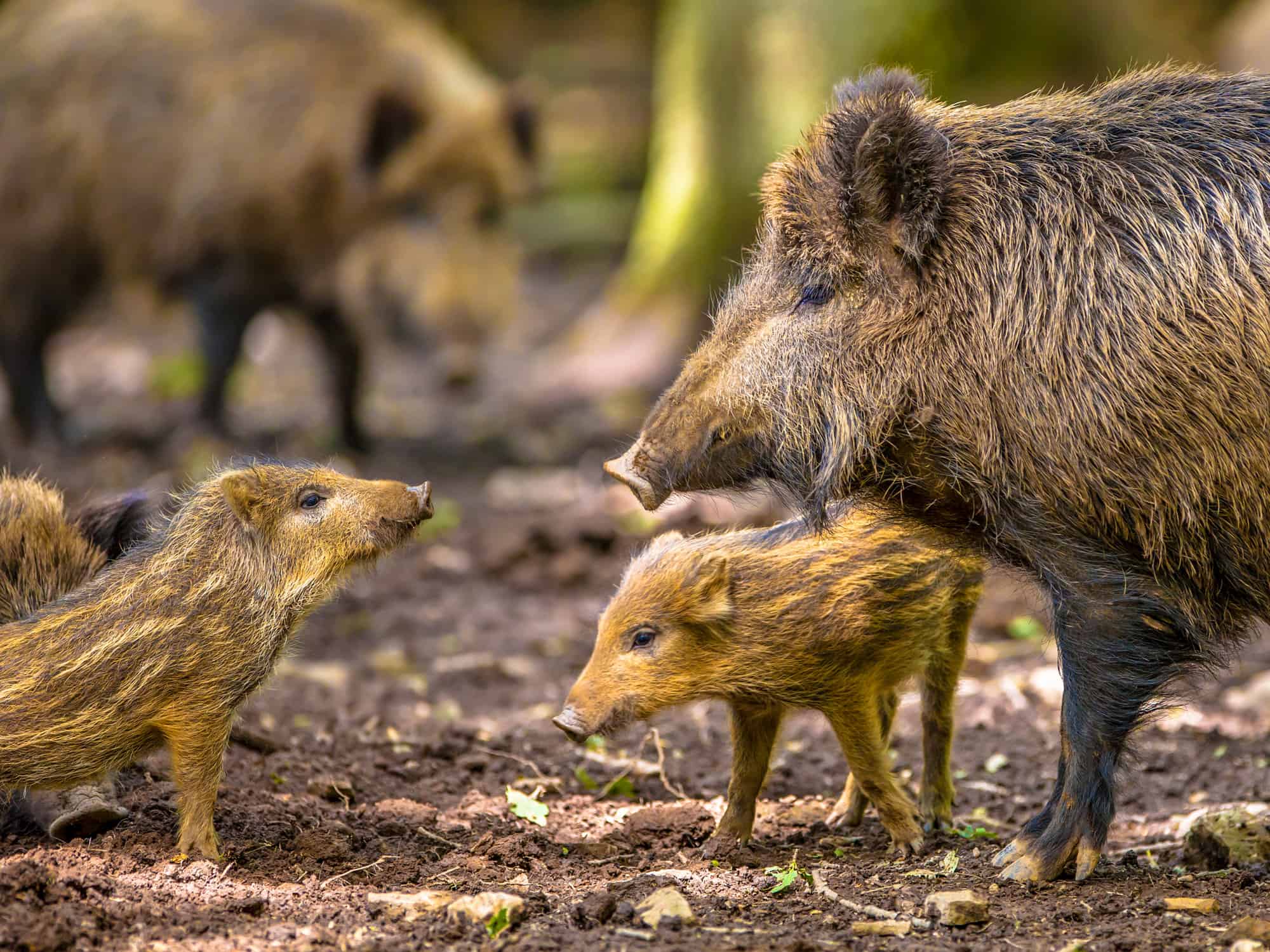
Wild boar piglets are born with sharp incisor teeth. For domesticated piglets, owners often cut off the needle teeth to prevent injuries amongst the litter. Since their main food source is the sow’s milk, they do not use their teeth to chew, but to fight their siblings for their mother’s teats.
As the piglets mature, they are weaned from their mother and search out other food sources. Other teeth begin to grow around this time, providing the little boars with the tools to survive on more solid foods. After about a year, all baby teeth would have been replaced by adult teeth.
Diphyodont Teeth
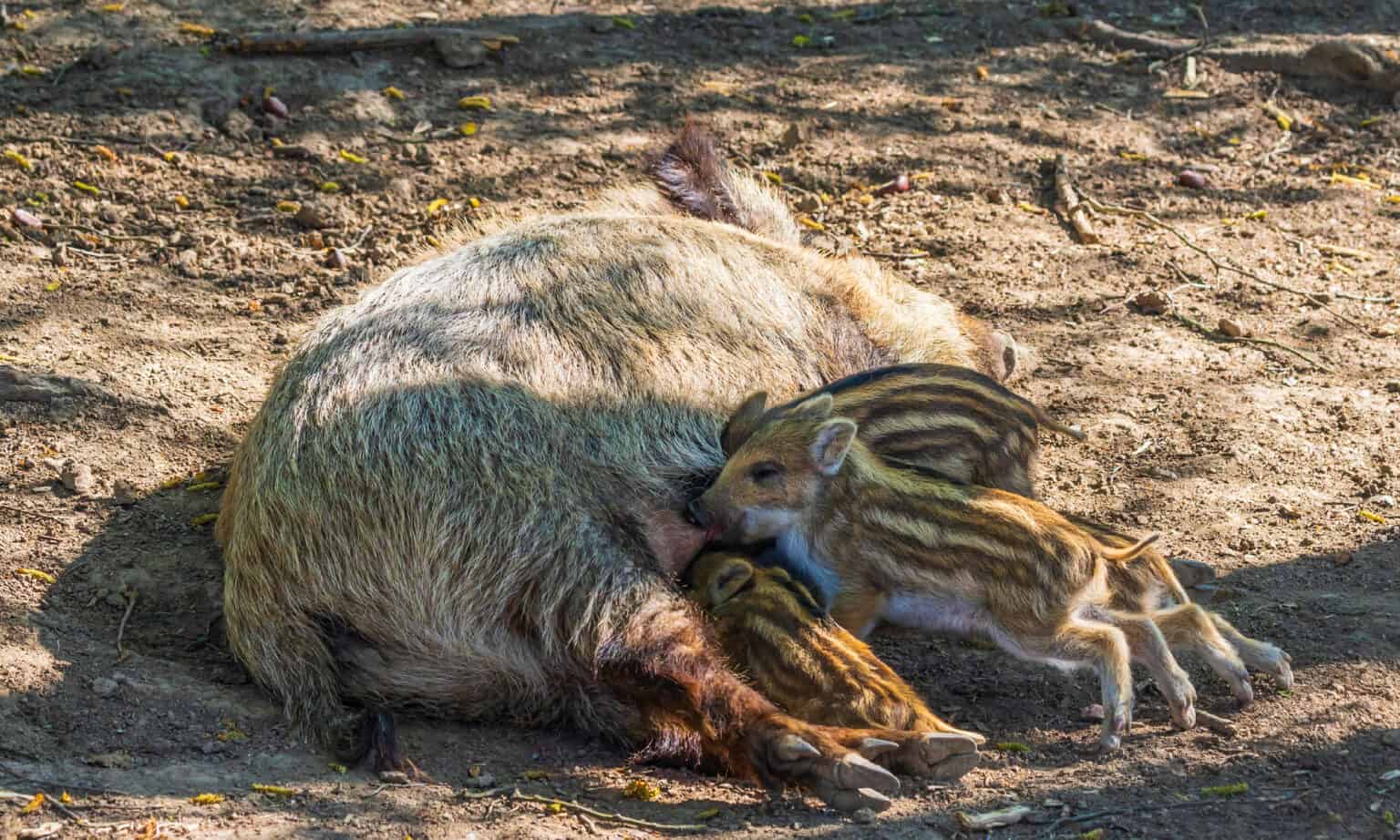
Like most pig species, wild boars have diphyodont teeth, which means they develop two types of teeth throughout their lives. This is identical to humans, who spur temporary teeth during childhood and shed those for permanent teeth as they grow older. These teeth include the incisors, canines, premolars, and molars.
Young wild boars have incisors, canines, and premolars as baby teeth. As they mature, they grow molars and can eat harder foods.
How Many Teeth Does A Wild Boar Have?