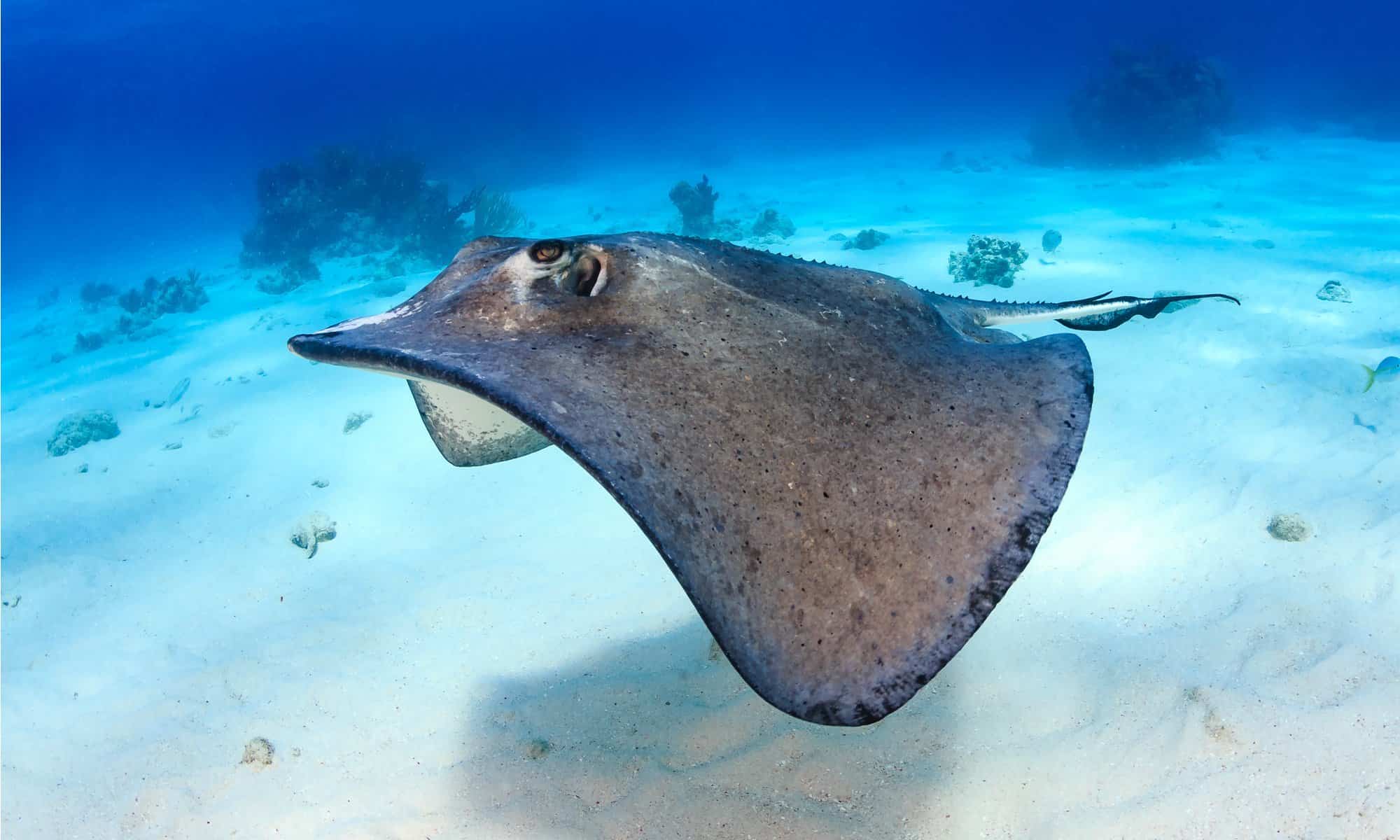
Manta rays and stingrays are some of the most graceful animals in the ocean, as they glide through the water in search of prey. These animals are both cartilaginous fish and have a very similar appearance, with their flattened bodies and broad pectoral fins, which can make it difficult to tell them apart. Luckily, there are actually a few distinctive differences that distinguish one from the other.
Comparing Manta Rays vs. Stingrays
| Manta Rays | Stingrays |
|---|
| Species | 3 species | Approximately 220 species |
| Distribution | Tropical and subtropical waters around the world, in open oceans and near coastal reefs | Females release pheromones to attract males, and males form a “courtship train” |
| Size | Up to 23 feet wide | Average 3 to 6 feet wide |
| Mouth | Front of body | Underside of body |
| Teeth | Tiny, peg-like | Flattened, used for crushing prey |
| Tail | Does not have a barb | Has a venomous barb |
| Diet | Zooplankton | Mainly crustaceans and small fish |
| Mating Behavior | Females release pheromones to attract males and males form a “courtship train” | Males bite females before mating with them |
| Gestation Period | 12 to 13 months | 3 to 11 months, depending on the species |
| Intelligence | Show evidence of being self-aware | Have not shown evidence of being self-aware |
| Litter Size | Usually one pup | Usually 2 to 10 pups |
| Lifespan | 40 to 50 years | 15 to 25 years |
The Key Differences Between a Manta Ray and a Stingray
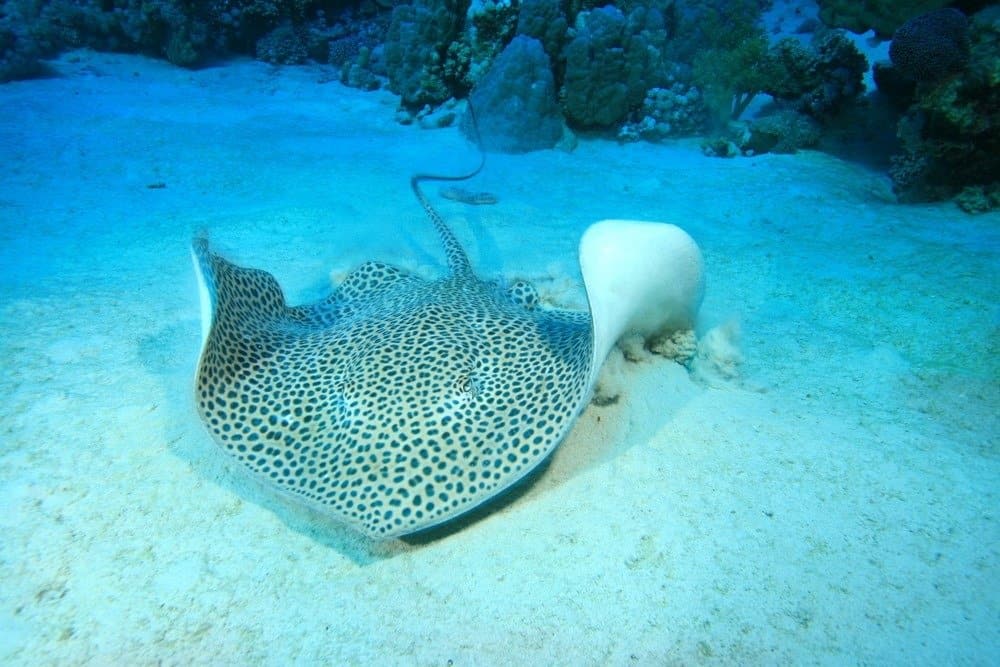
There are many differences between manta rays and stingrays, including what they eat, how they eat, and how they mate. Let’s take a closer look at these differences below.
Distribution
Manta rays live in tropical and subtropical waters all around the world and also occasionally venture into temperate waters. The Atlantic manta ray and the reef manta ray both inhabit waters close to coral reefs and the coasts. The Atlantic manta ray has the smallest distribution of the three species of manta rays, inhabiting only the western region of the Atlantic Ocean. However, the giant manta ray prefers the open ocean and is rarely found in coastal regions.
Stingrays also inhabit tropical and subtropical waters. Some species can be found in the open ocean, but many prefer the coastal regions. However, there’s also a group of stingrays known as freshwater stingrays that inhabit bodies of freshwater. There are estimated to be more than 35 species of freshwater stingrays, and they live in lakes and rivers across South America.
Size
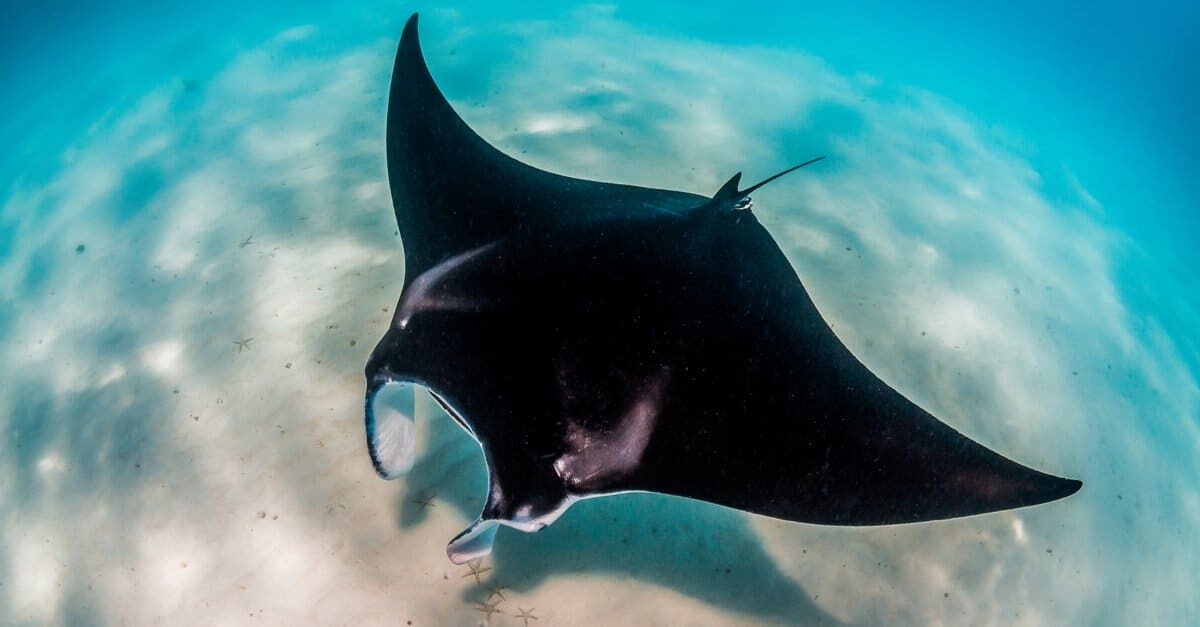
The next difference between manta rays and stingrays is the most obvious one — their size. Manta rays are much bigger animals than stingrays. The largest species is the giant manta ray, which has a disc width of up to 23 feet and a length of up to 30 feet. Meanwhile, stingrays have an average width of three to six feet, depending on the species. Some can be much smaller than this, such as the bluespotted ribbontail ray, which has a disc width of only 12 to 14 inches.