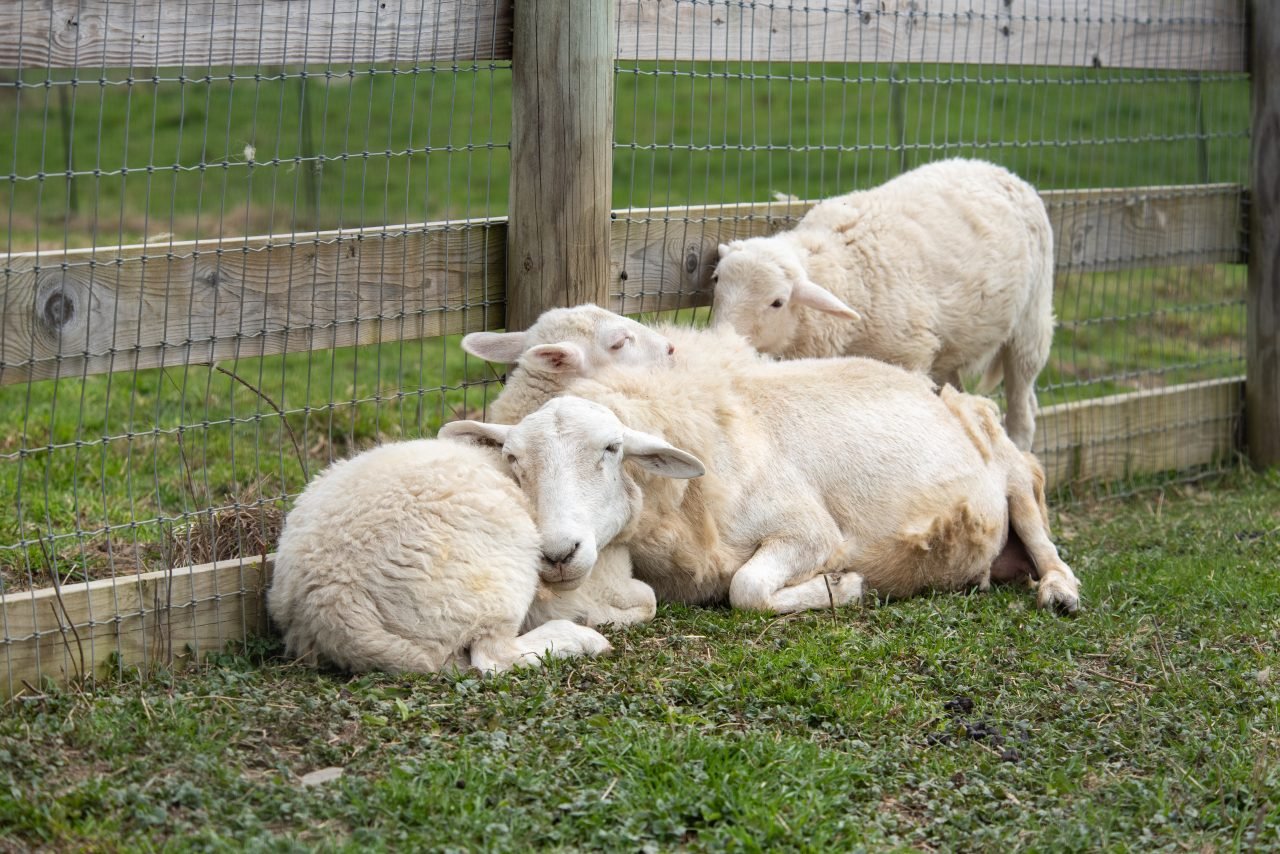
Hundreds of millions of sheep are farmed each year, but how much do you know about these intelligent and social animals?
Among visitors, staff, and volunteers alike, the rescued sheep are known as some of the most gentle, affectionate, and caring animals at Farm Sanctuary. In fact, the sheep barn is a favorite spot to slow down and enjoy peaceful, inspiring moments.
They’re often considered unintelligent animals who simply follow the herd, but you may be surprised to learn how smart and emotionally complex sheep really are.
1. Sheep recognize emotion on each other’s faces
Sheep don’t just recognize their herdmates, but they can perceive emotions on another sheep’s face and tend to show a preference for happy expressions. They can also recognize human faces, even those they aren’t familiar with—and even in photos!
2. Sheep have a nearly 320-degree field of vision
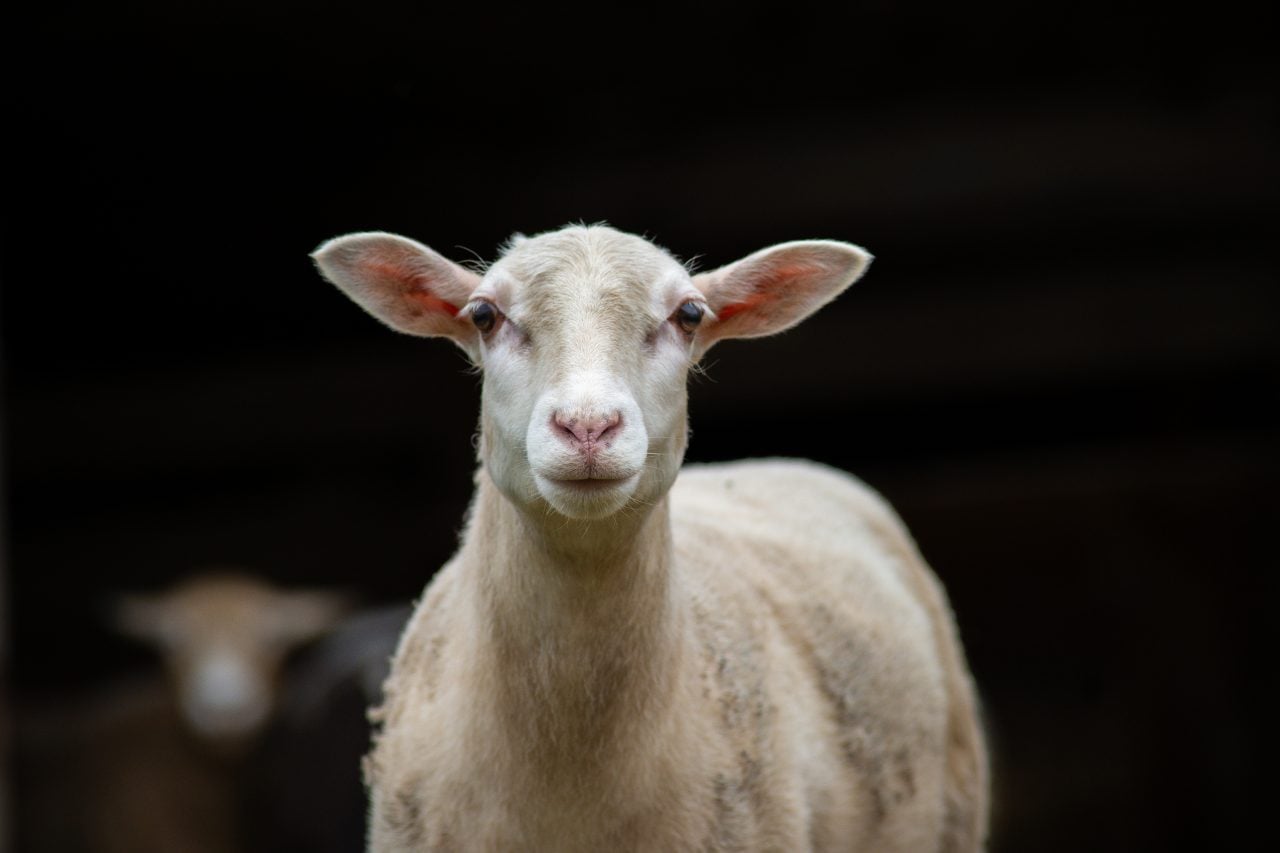
Like chickens and turkeys, sheep have a wider field of vision than humans: 270-320 degrees, compared to our 180 degrees. And like horses, a sheep’s eyes are toward the side of their head, offering better peripheral vision that helps them avoid predators.
3. Mothers and lambs know each other’s voices
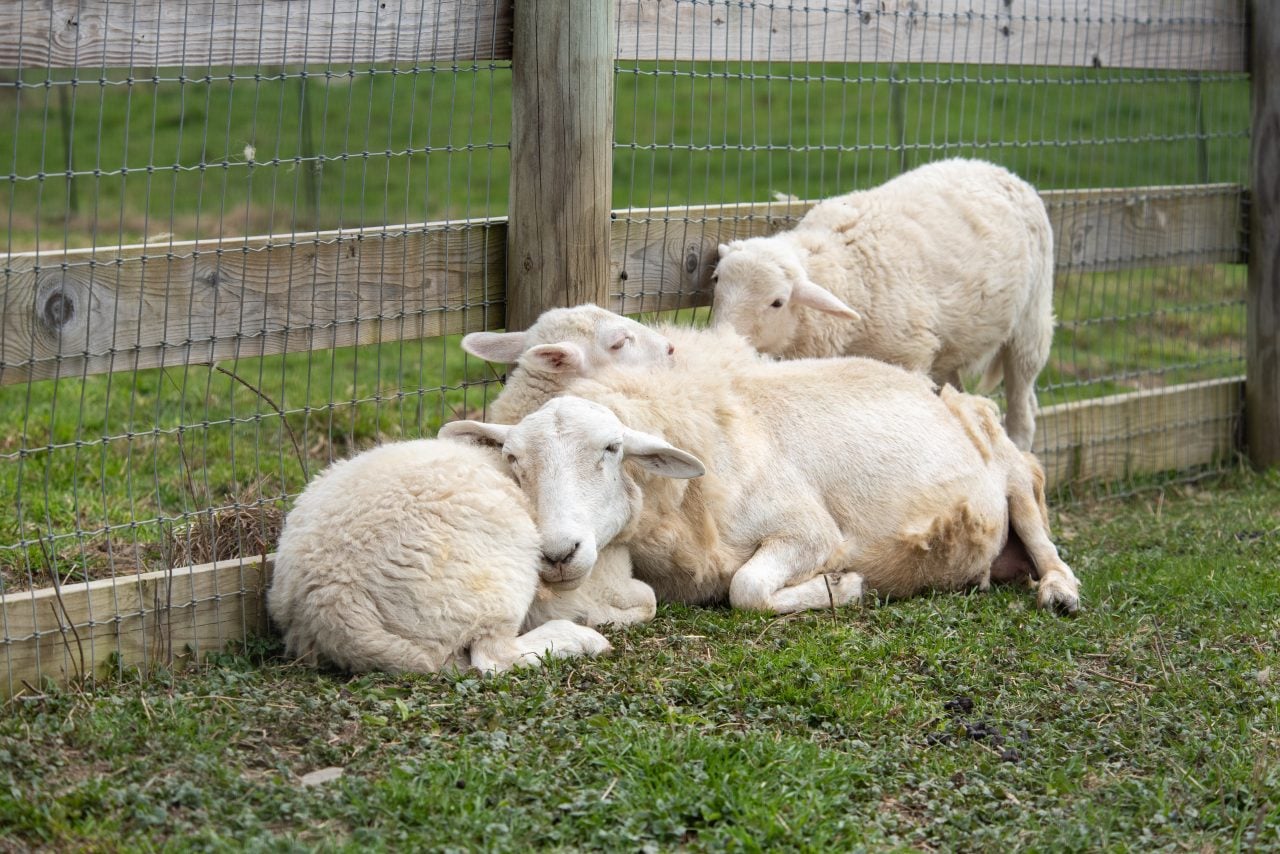
Sheep are caring and protective mothers, and even soon after birth, they and their lambs recognize the sound of each other’s calls. Jeanne and Margaretta (above) were born at Farm Sanctuary after their mom, Evie, was rescued from cruelty; their family has shared a deep bond from day one.
4. Female sheep tend to stay in their group of friends of life
While sheep are denied the chance to be in their families and natural social groups in animal agriculture, ewes (female sheep) typically stay in close-knit matriarchal groups when given the freedom to. This includes young lambs cared for by their moms and others in the flock.
5. Male sheep will protect flockmates deemed weaker
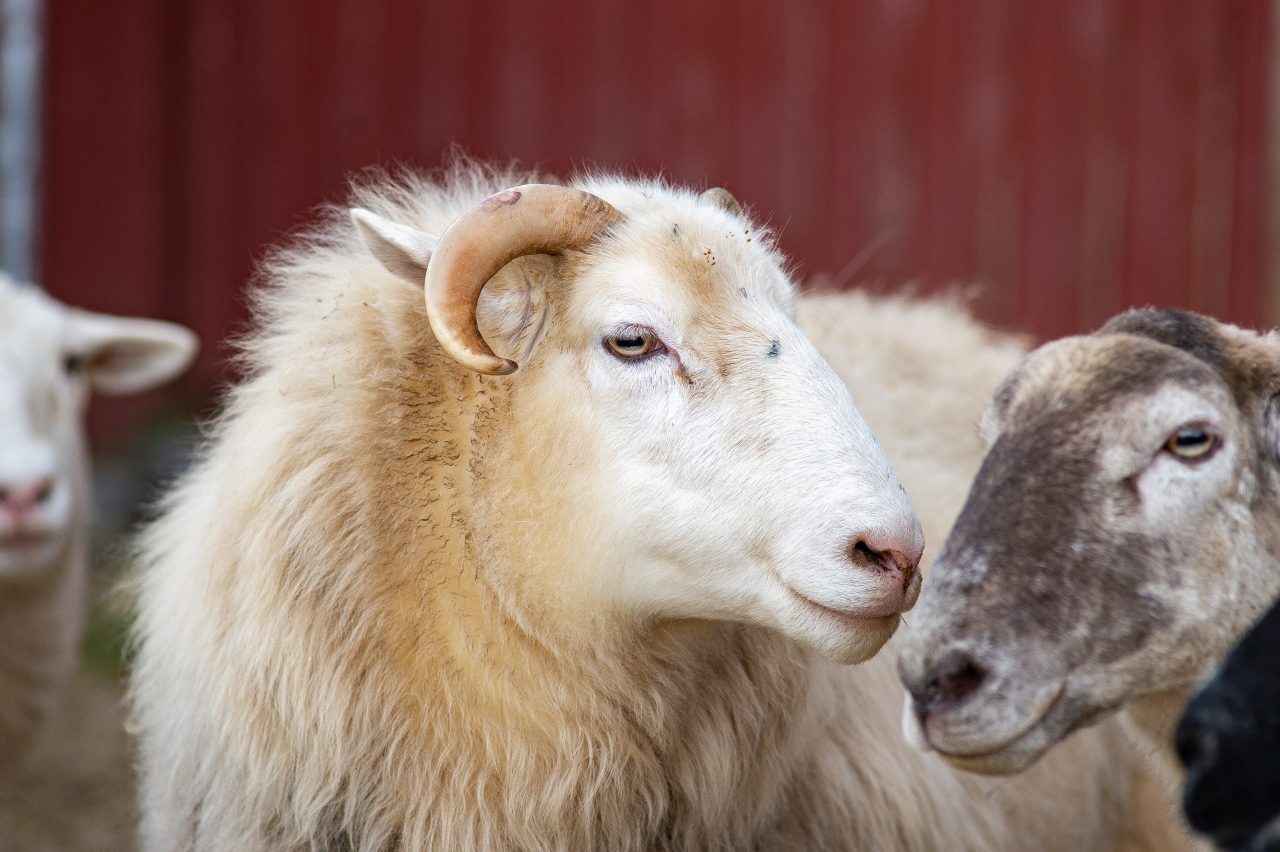
You may not associate sheep with conflict resolution, but when there’s trouble, rams (male sheep) are known to protect others in the flock, especially those injured or considered weaker. It’s good to have friends.
6. Sheep are used for dairy production
Like cows and goats, sheep are used on dairy farms, where they suffer an exploitative cycle for milk production: repeatedly being impregnated and having their lambs taken from them so their milk can be sold. Globally, around 100 million sheep are raised for dairy.
7. Their wool is constantly growing
Sheep bred for animal agriculture grow an unnatural amount of wool, more than they can shed naturally, as their wild counterparts would do. Therefore, sheep need to be sheared for comfort (we do this gently and safely at Farm Sanctuary—see above and click here to read more!). However, sheep suffer a painful and terrifying process in the wool industry that can leave them injured.
8. About 40% of U.S. sheep are kept on large-scale farms
When it comes to sheep, you may picture animals grazing in a lush, green pasture with plenty of space to roam. In reality, roughly 40 percent of farmed sheep in the U.S. are kept on factory farms in flocks of 1,000 animals or more.
9. More than 550 million sheep are slaughtered each year globally
Around the world, over half a billion sheep are slaughtered annually for human consumption. In the U.S. alone, over 5 million sheep and lambs are raised each year—and sadly, most of these animals are killed when still very young.
10. Most sheep are killed at just 6-8 months old
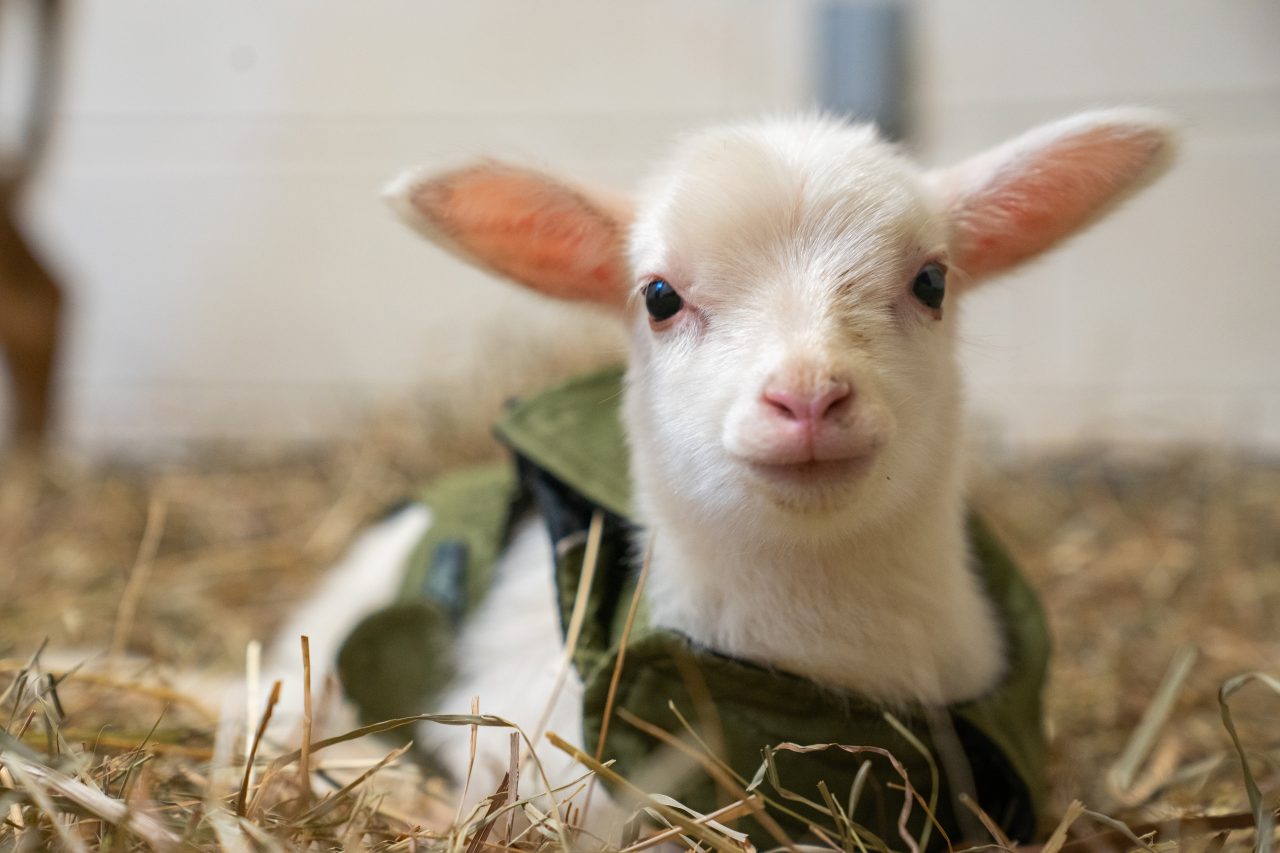
On average, sheep have a natural lifespan of about 10-12 years, but in animal agriculture, these gentle animals are slaughtered before they even turn one. Most U.S. sheep are killed at 6-8 months old to serve the lamb meat industry.