Something occurred to me recently that I’d never thought of before: porcupine birth. Yeah. Ouch, right? Covered head to tail in sharp quills—that’s gotta pose a serious problem in the delivery room. But nature, as usual, has a clever workaround. Baby porcupines, adorably called porcupettes, are born equipped with a surprisingly soft version of their famous armor, which the mama porcupine is no doubt very grateful for.
But beyond the birthing process itself, the story of the porcupette is quite fascinating. Within hours, the quills harden, providing a formidable defense that allows the porcupette to face the world almost immediately. The porcupette’s first days and moments are a time of rapid transformation and early independence. For the baby porcupine, survival begins immediately after birth.
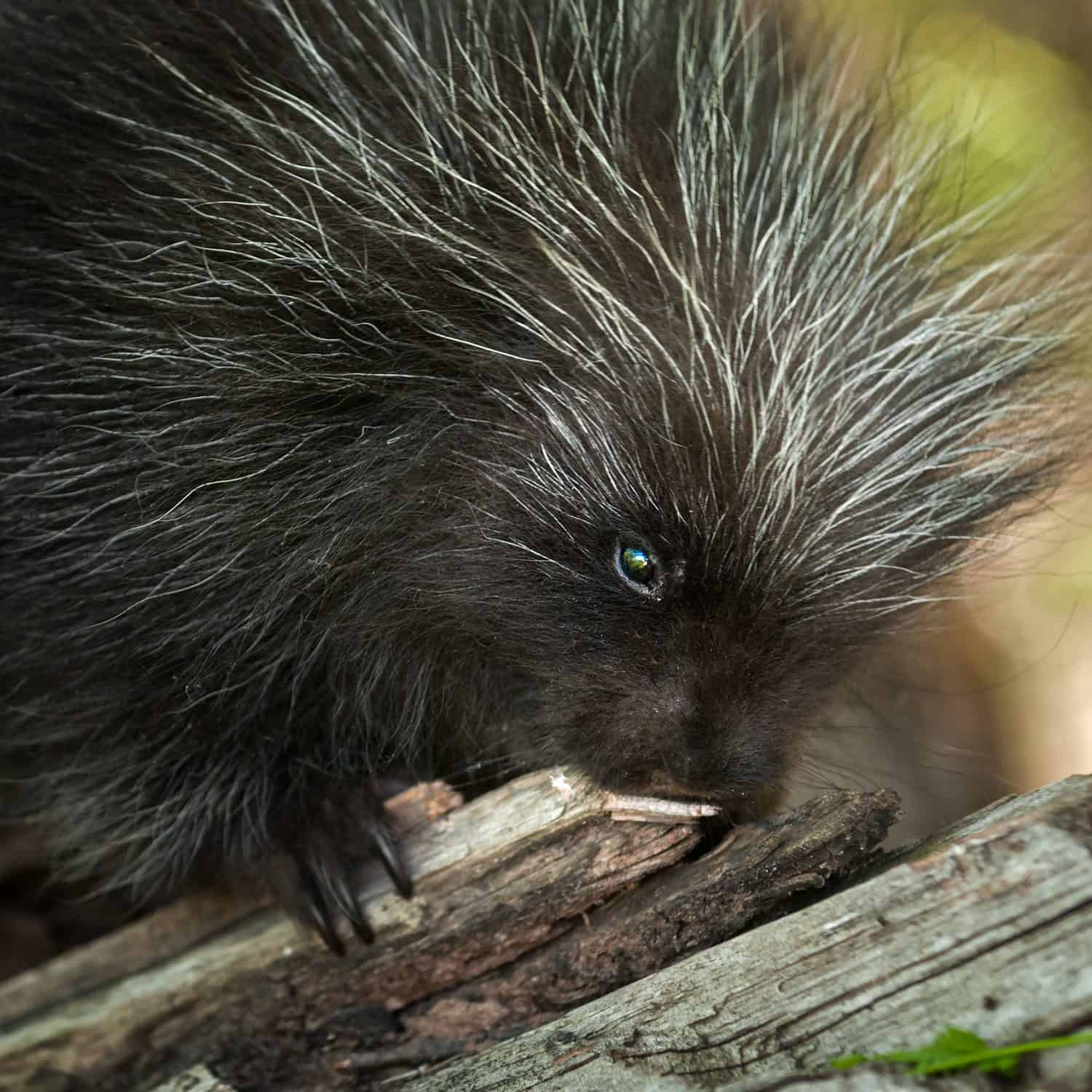
What Is a Porcupette?
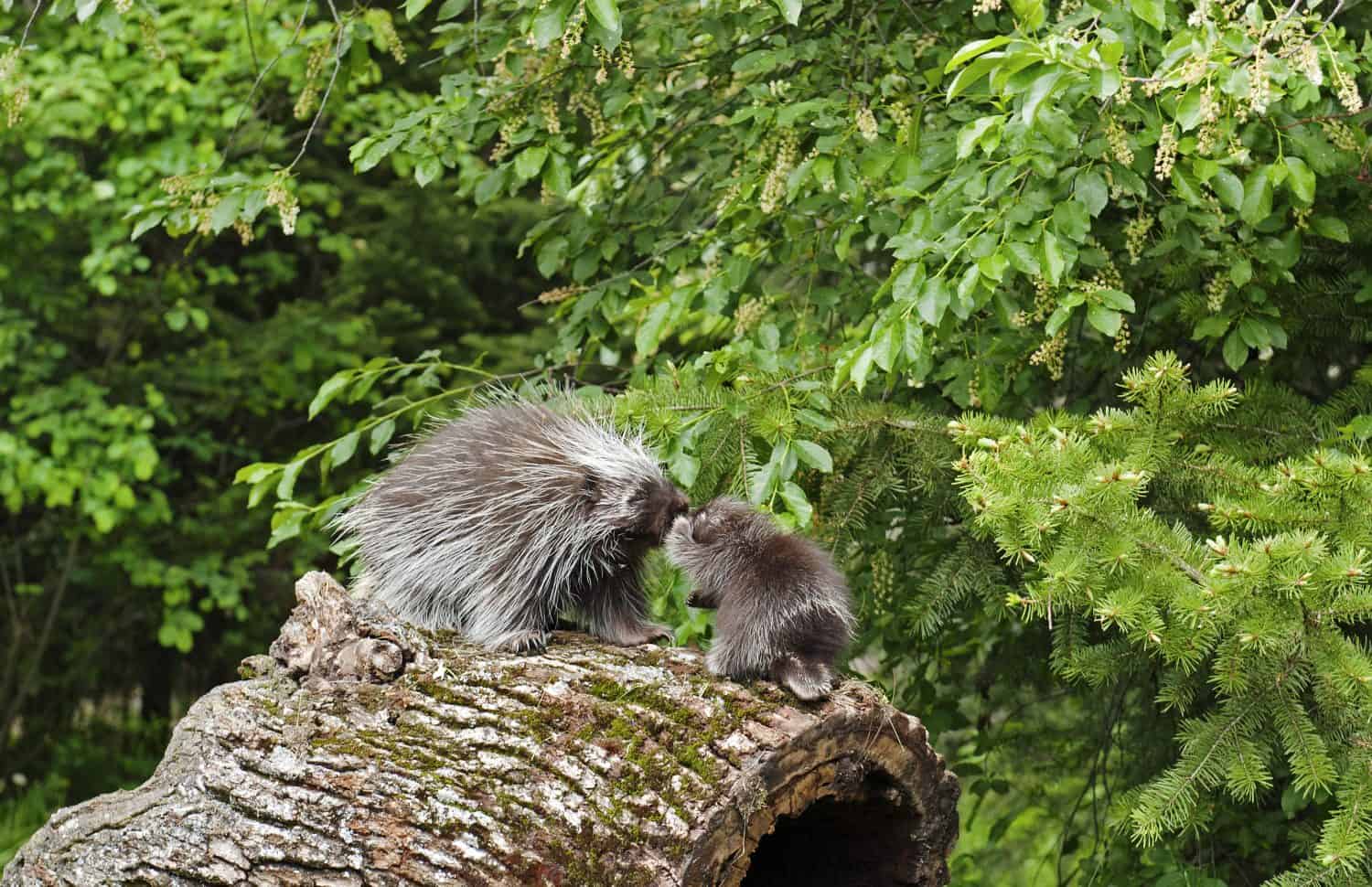
A porcupette is the newborn offspring of a porcupine. In North America, that usually means the North American porcupine, the continent’s second-largest rodent after the beaver. Unlike many mammals whose young arrive helpless and underdeveloped, porcupettes are what biologists call precocial. That means they’re born with eyes open, fur and quills already present, and the ability to move on their own almost right away.
Most porcupine mothers give birth to just one baby at a time, though, like humans, twins are possible on rare occasions. This single-offspring strategy works well, considering the investment required. A porcupette is relatively large at birth, often weighing around one pound, and arrives far more developed than the tiny, blind newborns of animals like mice or squirrels.
Soft Quills for a Safe Birth
Adult porcupines carry tens of thousands of stiff, barbed quills that detach easily when pressed against a predator. Needless to say, those quills would be dangerous—not to mention exceedingly unpleasant—for a mother during birth if they were hard from the start.
Instead, porcupettes are born with quills that are soft, flexible, and flattened against the body. They feel more like thick, damp hair than needles. This softness is crucial, allowing the baby to pass through the birth canal without injuring the mother, reducing the risk of internal wounds or infection.
Almost immediately after birth, something dramatic happens. Exposure to air causes the quills to dry. As moisture evaporates, the keratin structure inside each quill stiffens. Within just a few hours, sometimes less than a day, those once-pliable quills harden into the sharp, functional spines that they will be for the rest of the porcupine’s life. It’s one of the fastest post-birth physical transformations seen in mammals, almost like a human newborn developing a mouthful of fully grown, pearly white teeth within a day of leaving the womb.

Armored Within Hours
That rapid hardening isn’t just impressive, it’s also essential. Porcupines don’t build nests, dens, or burrows for their young. The mother gives birth on the ground, often in a sheltered spot like dense vegetation or near a fallen log, but there’s no long-term nursery. Once the porcupette’s quills harden, it gains immediate protection against many would-be predators.
It is a common misconception that porcupines shoot their quills. In reality, the quills detach easily when touched. Each quill is tipped with microscopic barbs that make it difficult to remove once embedded. Even a curious sniff from a predator can result in a painful lesson. For a porcupette, having hardened quills quickly can mean the difference between life and death at this vulnerable stage.
Born Mobile
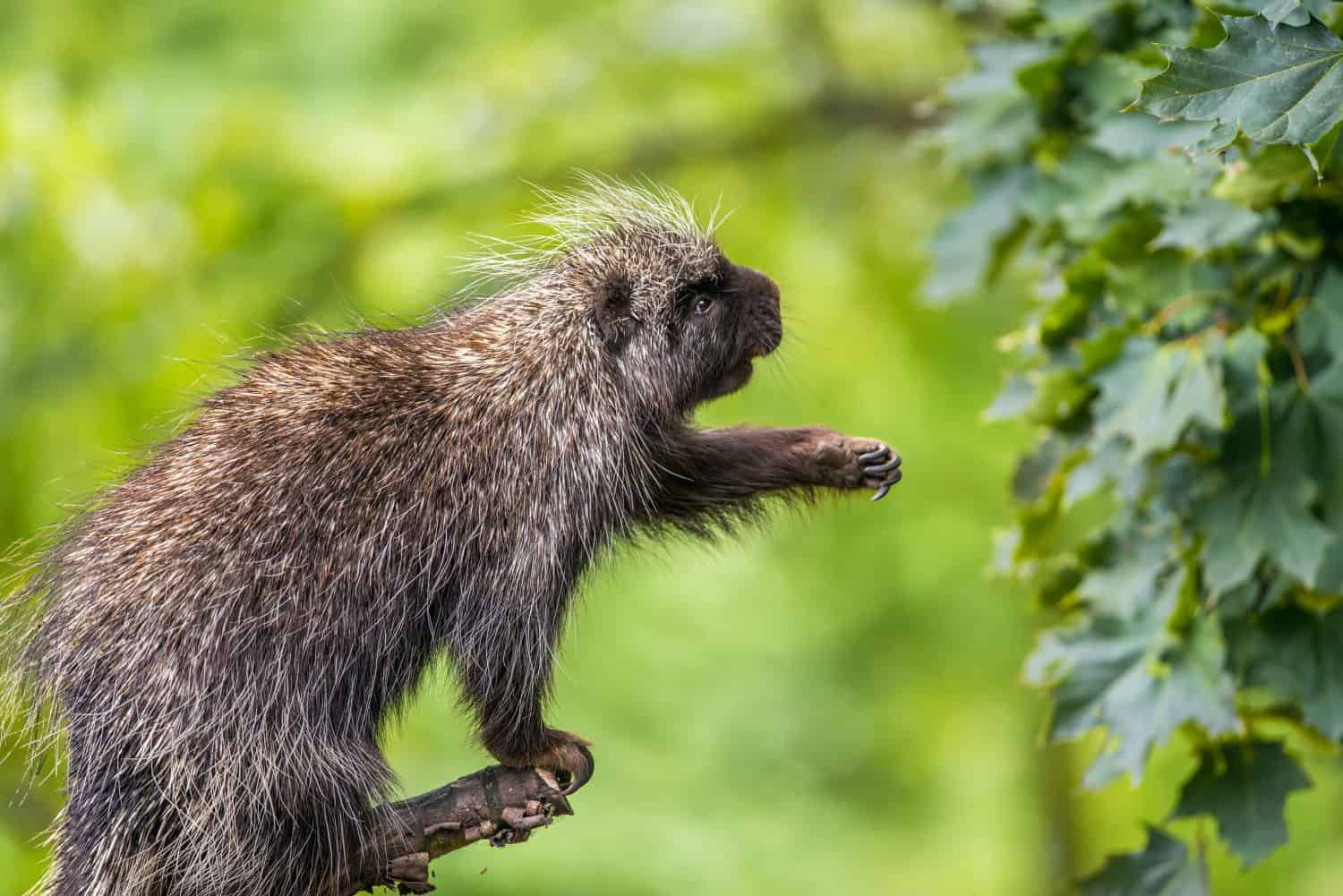
Defense is only part of the equation. Porcupettes are also born ready to move. Within hours of birth, they can walk, and within days, they’re even on their way to being capable climbers. This is especially important for tree-dwelling species like the North American porcupine, which spends much of its life in branches feeding on bark, leaves, and twigs.
Climbing ability doesn’t develop overnight, but the basics are present within a day or two. Strong limbs, curved claws, and a sturdy body allow a porcupette to scramble up low trees while staying close to its mother. This early mobility helps the baby keep up as the mother forages and reduces the time it spends exposed on the ground.