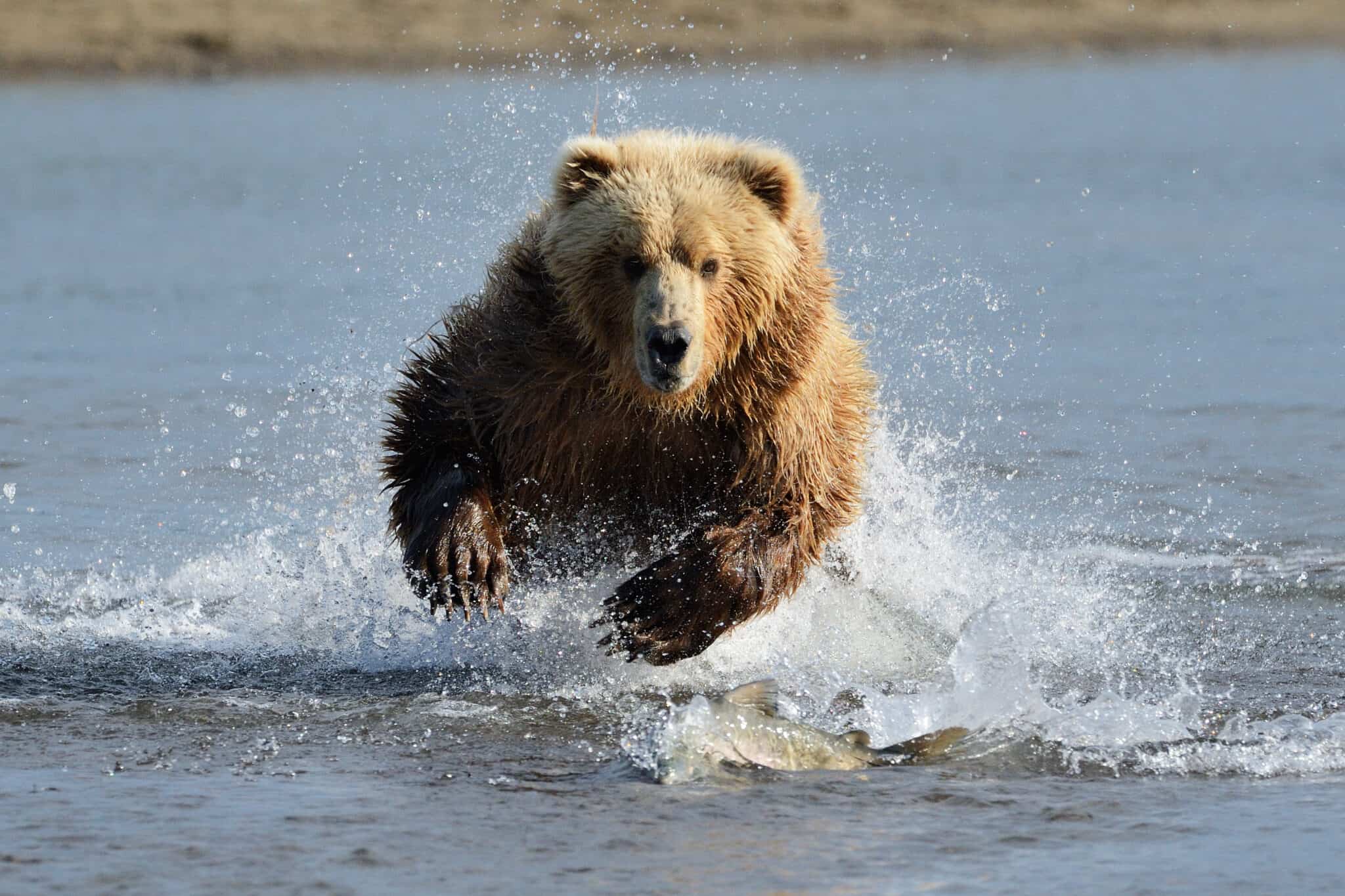
A bear is wandering through the woods when, suddenly, a tiger leaps out from behind a nearby bush. The two animals square off with each other, neither side backing down or giving an inch of ground. The tiger came here for one reason, to hunt the bear and turn it into dinner. However, now that the tiger has shown its hand, the bear doesn’t intend just to roll over and die. Both of these apex predators will battle to their last breath. Now that it’s come to this, in a fight between a bear vs tiger, which of them would win?
Our first order of business is to decide which bear and tiger species will compete in this battle. After that, we’ll need to consider several factors and set some ground rules for the encounter. Next, we’ll compare seven critical attributes of each animal that will play a factor in the encounter. Based on this information, we’ll determine the winner between a bear vs tiger after playing out scenarios that could swing the fight in either animal’s favor.
The 7 Key Factors in a Fight Between Polar Bears and Siberian Tigers
Polar Bear vs Siberian Tiger: Size
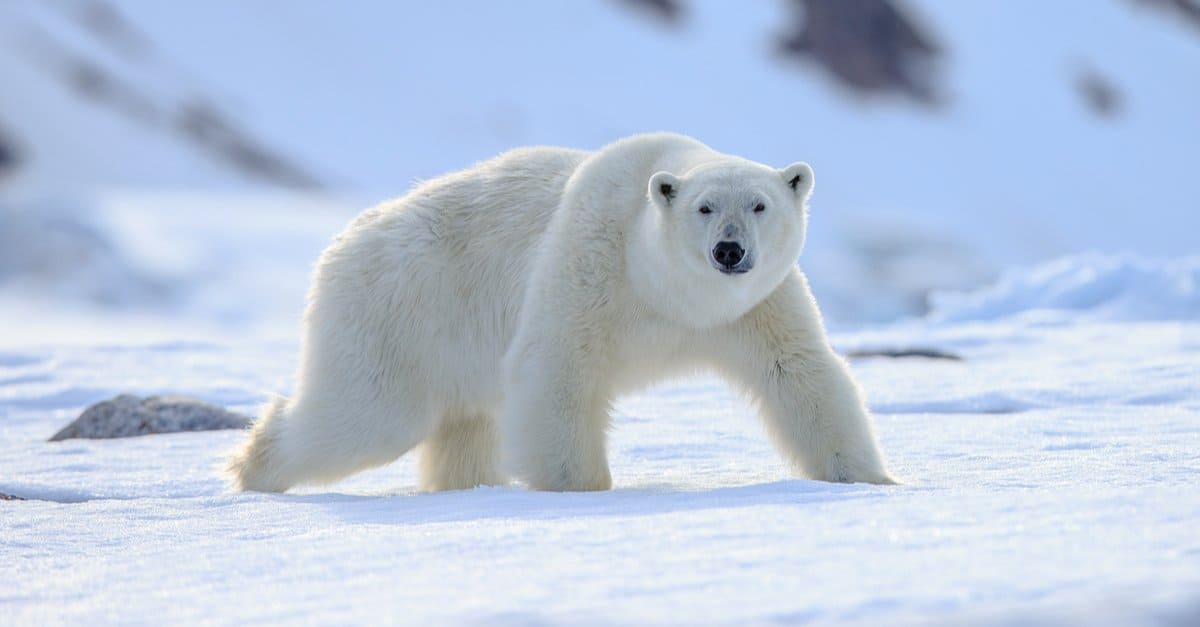
Based on their size, polar bears outclass Siberian tigers in terms of length and mass. Male polar bears generally average between 7 feet, 10 inches, and 9 feet, 10 inches long, and weigh from 770 to 1,500 pounds. However, especially large polar bears can reach up to 11 feet tall and weigh over 2,000 pounds. Meanwhile, most male Siberian tigers measure between 5 feet, 3 inches, and 6 feet, 6 inches long (without the tail), and weigh from 397 to 650 pounds. While large specimens can reach up to 10 feet long and weigh nearly 900 pounds, that means that even the largest Siberian tigers would be barely larger than the smallest polar bears. Given this information, the polar bear possesses an advantage when it comes to strength and size. Advantage: Polar Bear
Polar Bear vs Siberian Tiger: Speed
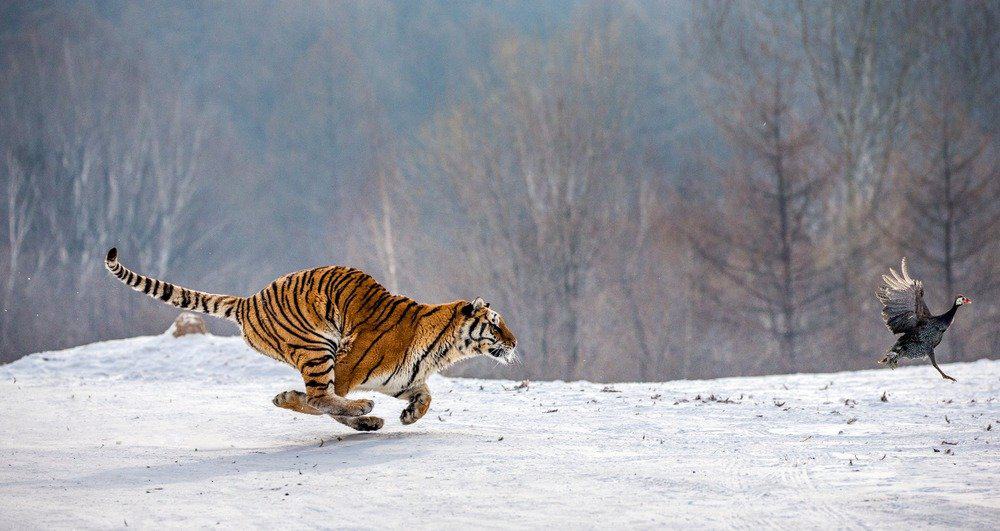
Although the polar bear may beat out the Siberian tiger in the realm of brute force, it can’t match a tiger’s pure speed or agility (at least on land). At top speed, polar bears can run nearly 25 miles per hour. However, its top speed pales compared to the Siberian tiger, which can reach speeds up to 40 miles per hour. That said, if this battle took place at sea, the polar bear would easily trounce the tiger with its top swim speed of over 6 miles per hour. Unfortunately for the polar bear, this battle will be fought on land, which means the tiger gains a distinct advantage with its lighter frame and quicker reflexes. Advantage: Siberian Tiger
Polar Bear vs Siberian Tiger: Bite Force
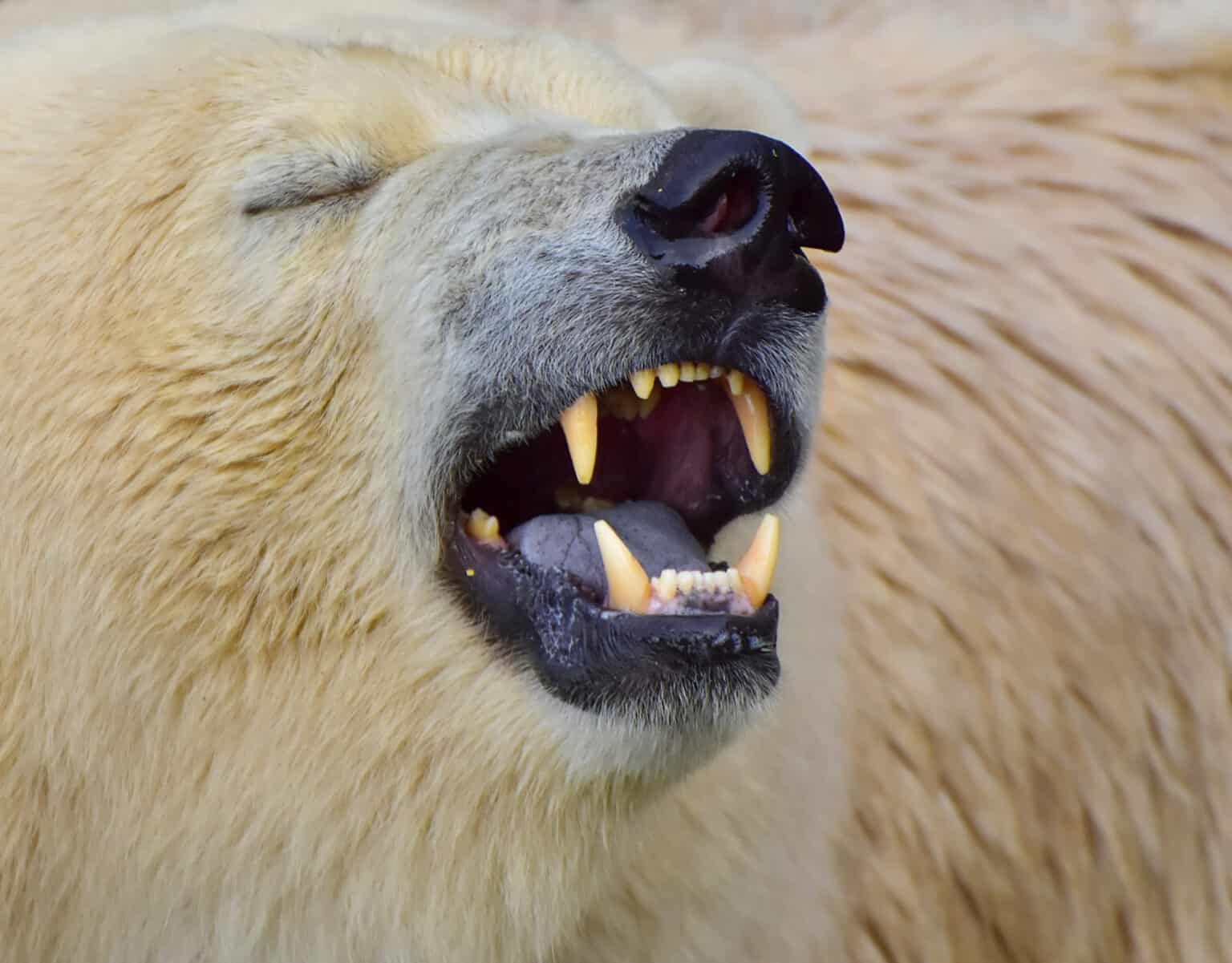
Polar bears and Siberian tigers both possess potent bites that can do severe damage to flesh and bones. With its massive skull, the polar bear can deliver over 1,200 psi per bite, which is strong enough to crack a whale’s skull. Right behind the polar bear in terms of strength is the Siberian Tiger. It delivers a maximum bite force of around 1,050 psi. Although tigers’ bite force is the greatest of any feline, the polar bear just barely retains the edge in this category. Advantage: Polar Bear
Polar Bear vs Siberian Tiger: Teeth
As carnivores, both polar bears and Siberian tigers possess razor-sharp teeth designed to rip and tear flesh. However, the number of teeth that each animal sports and the lengths of those teeth vary. Like most canines, the mouth of a polar bear contains 42 teeth. These teeth range in size and can measure up to 1.96 inches long. They are designed to bite through the thick blubber and fat on whales and seals. While the Siberian tiger’s mouth only contains 30 teeth, its fangs dwarf the polar bear’s. Its canines can measure between 2.5 to 3 inches long, making them perfect for puncturing thick flesh. In short, a polar bear’s bite inflicts more points of impact, but the bite delivered by a Siberian tiger cuts deeper. Given that the tiger can inflict a deeper and more threatening wound, it gains a slight advantage. Advantage: Siberian Tiger

Polar Bear vs Siberian Tiger: Claws
Most bear species wield large but relatively blunt claws. Unlike other ursids, the claws of a polar bear are incredibly sharp. They can measure 3.5 to 3.75 inches long. In addition to helping them catch and hold onto prey, their claws provide traction, which helps them maintain their balance when running on icy terrain. However, the claws of a Siberian tiger belong in another class of sharpness. Their retractable claws can grow up to 4 inches long and are ridiculously sharp. They possess a wicked curve that allows the tiger to latch onto its prey and prevent any possibility or escape. Considering their size, sharpness, and shape, the claws of an Amur Tiger pose more of a threat. Advantage: Amur Tiger
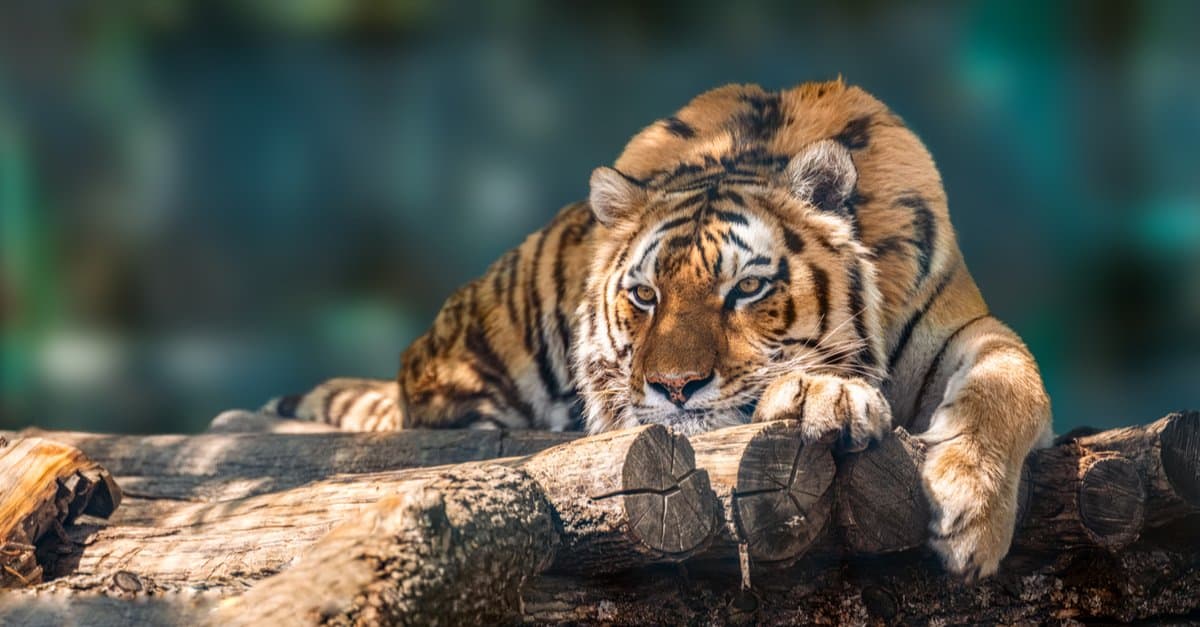
Polar Bear vs Siberian Tiger: Stamina
It would be fair to liken polar bears to the super athletes of the Ursidae family. They can swim for 30 miles in a single stretch, and some reports estimate they can swim up to 200 miles without resting. Additionally, younger, leaner polar bears can run at top speed for 1.25 miles, which only serves to solidify their incredible stamina further. On the other hand, Siberian tigers can only run at their maximum speed for around 300 feet. They are designed to execute short, explosive movements rather than conserve their energy for protracted conflicts. As a result, in a battle of attrition, the polar bear claims a decisive advantage. Advantage: Polar Bear
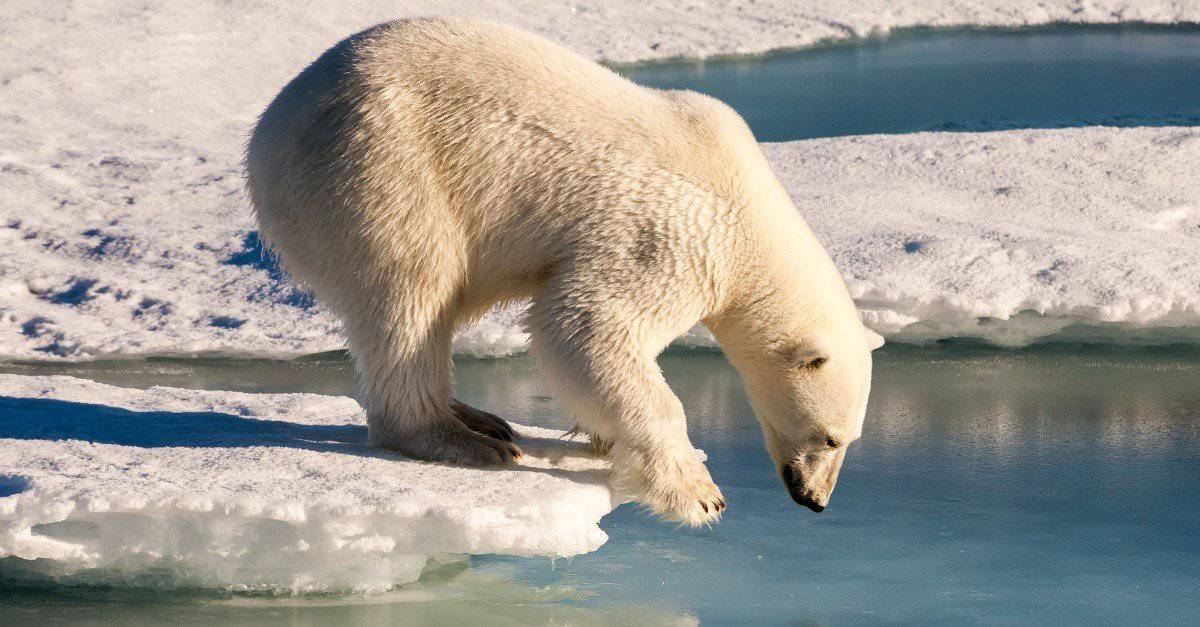
Polar Bear vs Siberian Tiger: Predatory Instincts
Both polar bears and Siberian tigers prefer to ambush their prey rather than attack head-on. Polar bears tend to wait upon an ice floe until an unsuspecting seal swims by, while Siberian tigers prefer to stalk their prey and attack from behind. In a land battle, the Siberian tiger possesses a distinct advantage. However, in an open field, removed of obstacles and any elements of surprise, the Siberian tiger’s advantages disappear. Polar bears frequently walk down large prey, including walruses, so they know how to attack foes in a straight-ahead battle. This is not the Siberian tiger’s forte, and as a result, the polar bear’s predatory instincts give it the advantage in a fight where surprise is not a factor. Advantage: Polar Bear
MORE INTERESTING FOR YOU
View on Threads
View on Threads
View on Threads
View on Threads
View on Threads
View on Threads
View on Threads
View on Threads
View on Threads
View on Threads
View on Threads
View on Threads
View on Threads
View on Threads
View on Threads
View on Threads
View on Threads
View on Threads
View on Threads
View on Threads
View on Threads
View on Threads
View on Threads
View on Threads
View on Threads
View on Threads
View on Threads