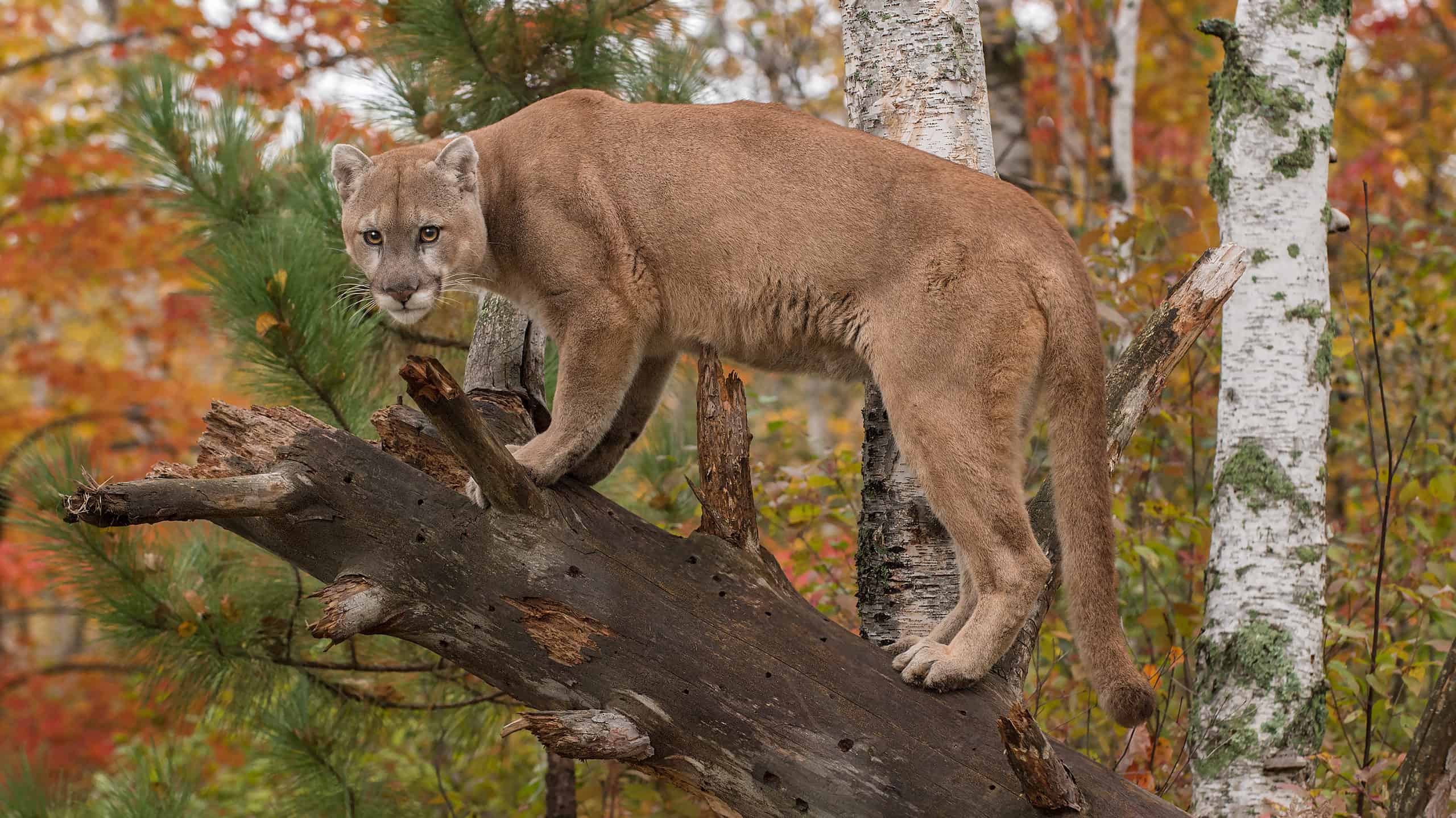
Mountain lions are so strong they belong in the same big cat category as cheetahs, tigers, and jaguars! Seeing one in the wild can be a thrilling experience. But what starts as a moment of wonder can quickly turn into a deadly scenario if you’re dealing with a predatory cat. Would you know how to survive a mountain lion encounter?
Mountain lions don’t usually attack people. But attacks do happen. If you’re heading into big cat territory, prepare by reading this short guide. We’ll explain the best tips for preventing an attack and handling an encounter safely.
Mountain Lion Identification

Knowing how to identify a mountain lion in the wild can help keep you safe. Fully grown mountain lions have a white underbelly. Their top coat is usually light brown, almost cinnamon, and they have black coloration on the tip of their tail and ears.
The scientific name for mountain lion is Puma con-color, translating to mean “cat of one color.” Worldwide these cats have many names, including cougar, red tiger, and puma.
Identify Mountain Lion Tracks
Mountain lion tracks are big. Since they have retractable claws, they don’t usually show in the tracks. And the front tracks are usually wider than the back ones.
You can also identify mountain lion tracks by studying the palm pad. The large track usually has an m-shape. There will be two lobes at the front of the track and three toward the back.
How Dangerous Are Mountain Lions?

Mountain lions are dangerous to deer but not so much to people. Encounters between these wild cats and people are rare, and attacks are also rare. You’re more likely to be struck by lightning than attacked by a mountain lion. That being said, mountain lions are insanely strong predators who commonly kill prey twice their size.
A single bite from a mountain lion and its lights out! They also have sharp claws that can slash their prey, delivering a deadly blow with one swipe.
Where Do Mountain Lions Live?
There are 15 states nationwide that have mountain lions. What are the chances you’ll have a mountain lion encounter? The answer depends on which state you live in.
Colorado has the most mountain lions, with population numbers around 7,000 high. The dense forests provide plenty of hunting grounds here, and the big cats love it.
California is also home to a healthy mountain lion population. There are an estimated 4,000 to 6,000 mountain lions throughout California.
Texas has mountain lions, but not nearly as many as California or Colorado. The exact numbers are unknown, but most of the big cats stick to the far western TransPecos region of the state.
Are you hiking in South Dakota? Then odds are you won’t see any mountain lions. There are an estimated 200 to 300 mountain lions thanks to reintroduction efforts.
Mountain Lion Hot Spots
If deer are present, mountain lions are likely nearby. These big cats prefer mountainous terrain. However, they’re comfortable navigating steep rocky canyons too.
Living throughout deserts and coastal forests, an adult mountain lion’s home range can extend past 100 square miles. Females usually have a range of 20 to 60 square miles.
Tips for Living Safely Around Mountain Lions

Do you live in a state with mountain lions? Then you can do your part to avoid a mountain lion encounter from happening in the first place.
For starters, whenever you’re outside, make some noise. If you ever see a wild mountain lion, resist the urge to feed them. Don’t leave food out or encourage them to return. This includes feeding wildlife that could attract mountain lions. If you’re feeding turkey and elk, you might accidentally attract the big cats that prey on them.
Next, trim the landscaping around your house. Get rid of any low-lying vegetation where mountain lions might hide. Removing dense vegetation is especially important around children’s play areas.
Whenever kids are playing outside, keep a close eye on them. Dusk and dawn are the most likely times for a mountain lion attack, so be extra vigilant during these hours. If you have domestic animals, keep them indoors.
More Ways to Prevent a Mountain Lion Attack
How can you prevent a mountain lion attack on the trail? Check with local park authorities before you hit the trail. Find out if there have been any repeated mountain lion sightings. And always be open guard throughout your hike.
Always make your presence known when you go hiking. Wear bear bells, sing, talk loudly, or use noise makers. You can buy a whistle or a horn to avoid a surprise encounter with wildlife.
If you can travel with a group, do so. Predatory animals are less likely to attack a group when compared to an individual. Plus, if you get hurt in some other way, like a trip and fall, you’ll have friends there to get help.
If you come across mountain lion kittens, get far away from them. The mother is nearby and won’t be happy to see you.
When choosing a campsite, avoid setting up near rock overhangs and cliffs. You should also avoid animal trails and thick brush.
If you can leave pets at home, do so. Taking pets out with you can attract mountain lions. While these big cats might not target humans, they’re notorious for going after domestic animals.
How to Defend Yourself Against a Mountain Lion

The mountain lion’s powerful bite, large claws, and swift movements make it an unfair match for any person. However, there are stories of people successfully fighting off mountain lions. Once you show a mountain lion, you’re not going to back down; chances are you’ll scare it off.
How Mountain Lions Attack
Mountain lions are ambush predators. These stealthy predators will silently stalk prey before pouncing from behind. After tackling their prey, mountain lions usually deliver a deadly bite to the spinal cord. They also go for the prey’s throat.
If a mountain lion attacks, fight back with everything you have. But make sure you protect yourself as much as possible in the process. Do everything you can to protect your throat and head.