Judie Schwager couldn’t believe her eyes.
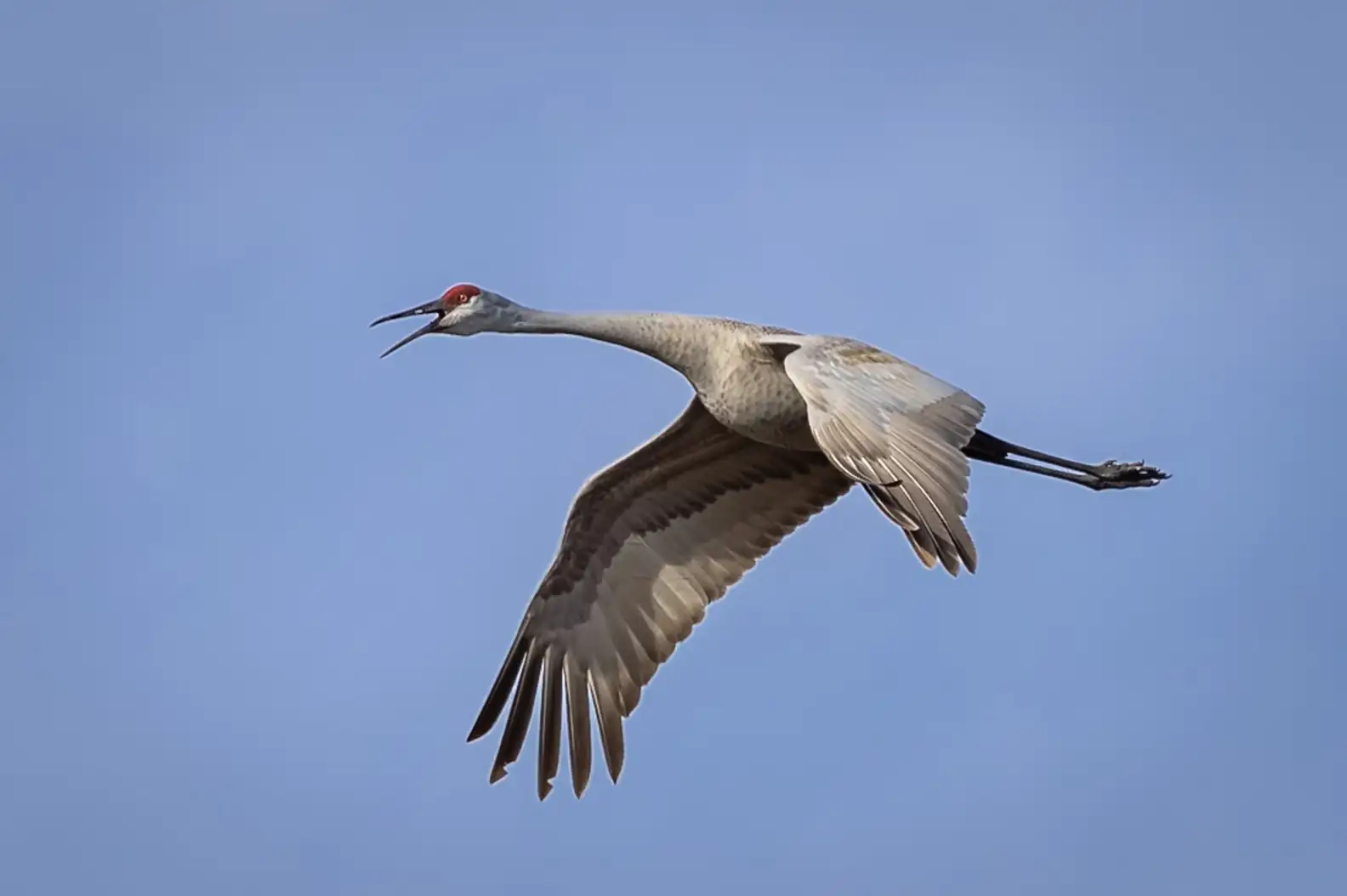
She was inside her home when she heard an animal cry that sounded as if it belonged in Jurassic Park, not the Northwest suburbs of Chicago, Illinois. She looked out the front window and did a double take.
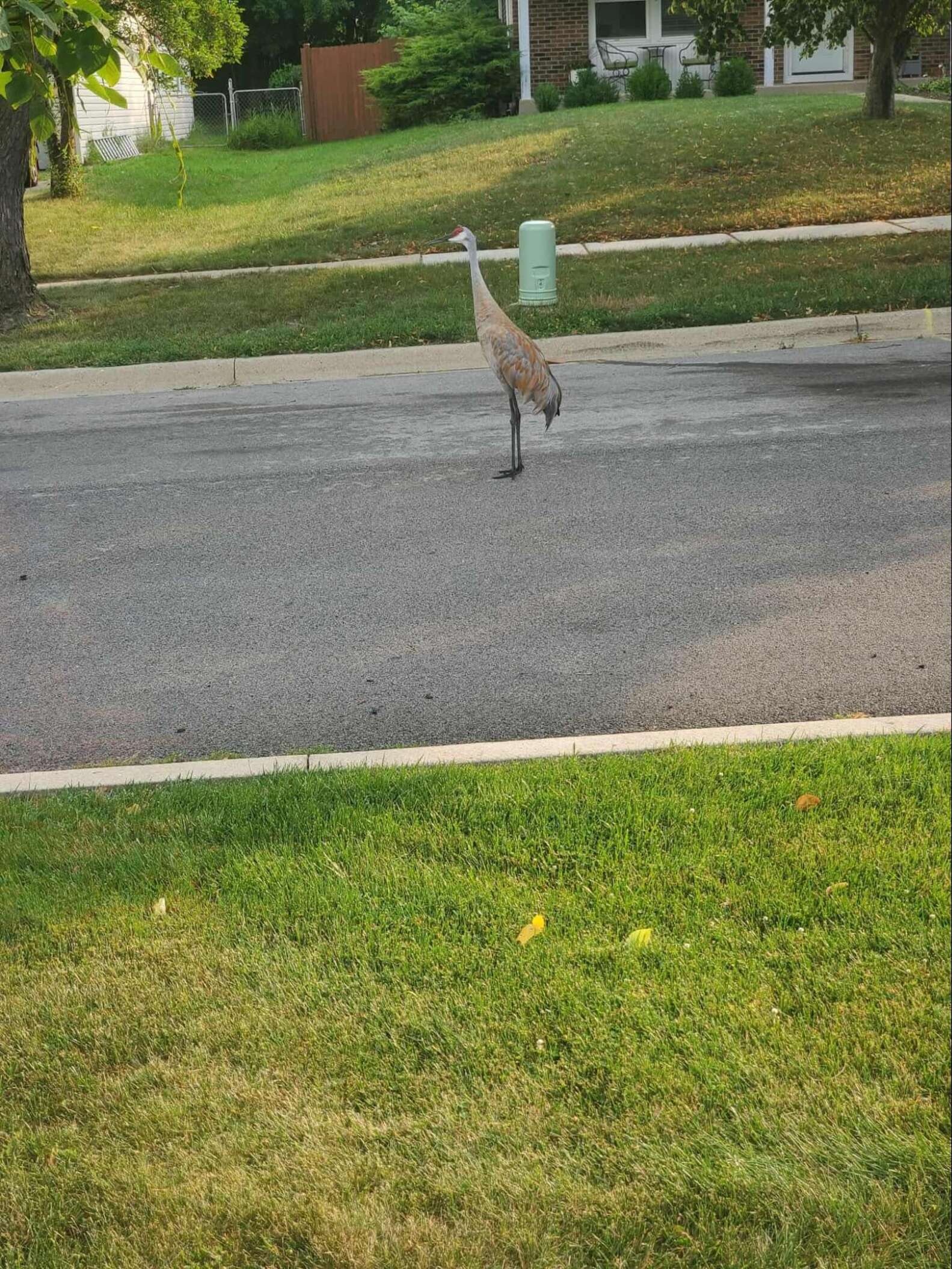
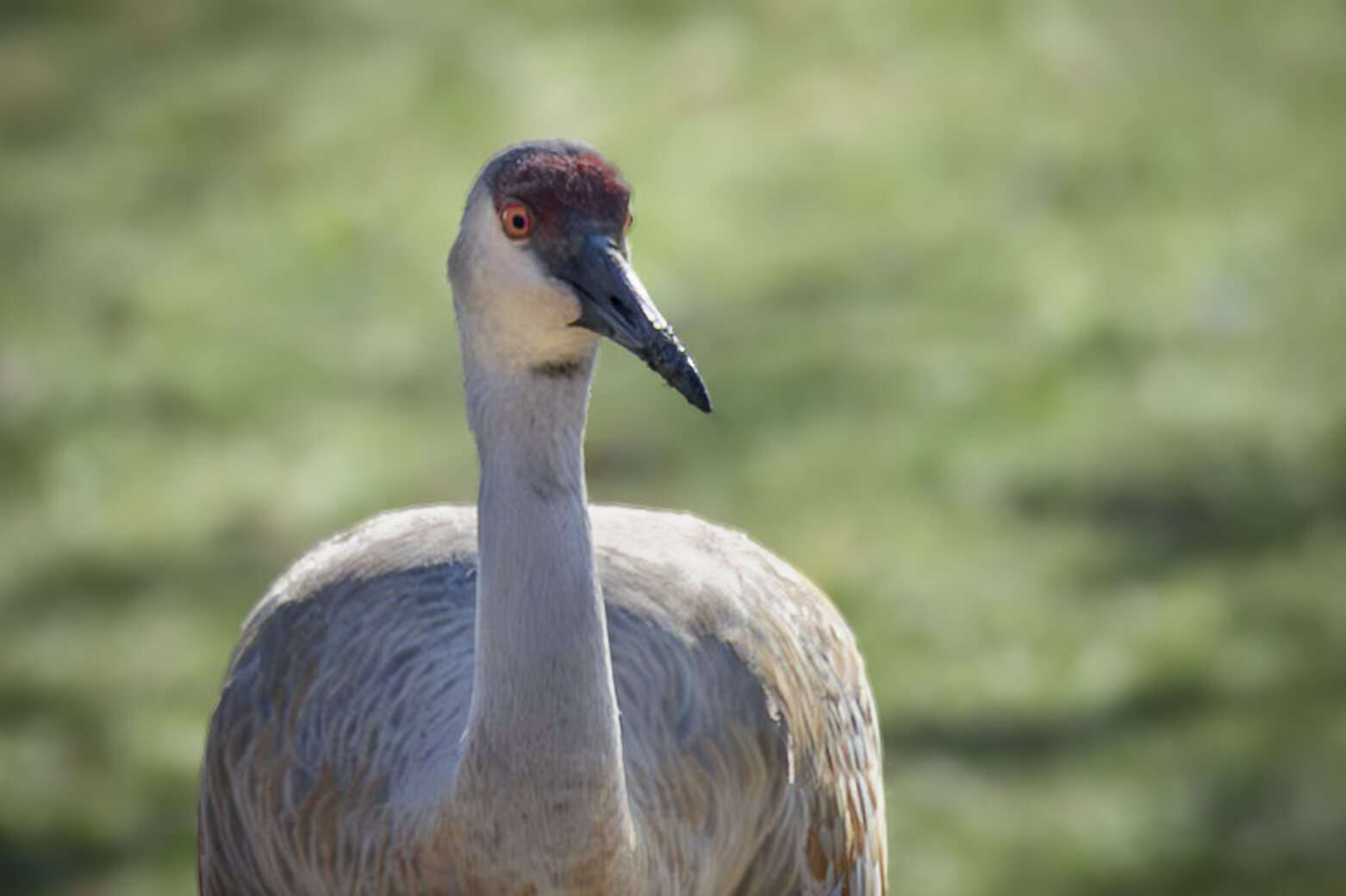
The sound was coming from a giant sandhill crane standing in the street. Concerned about the bird’s safety, she ran outside. “I motioned at him and said, ‘You better get out of the street,’” Schwager told The Dodo.
The bird appeared to listen to her.
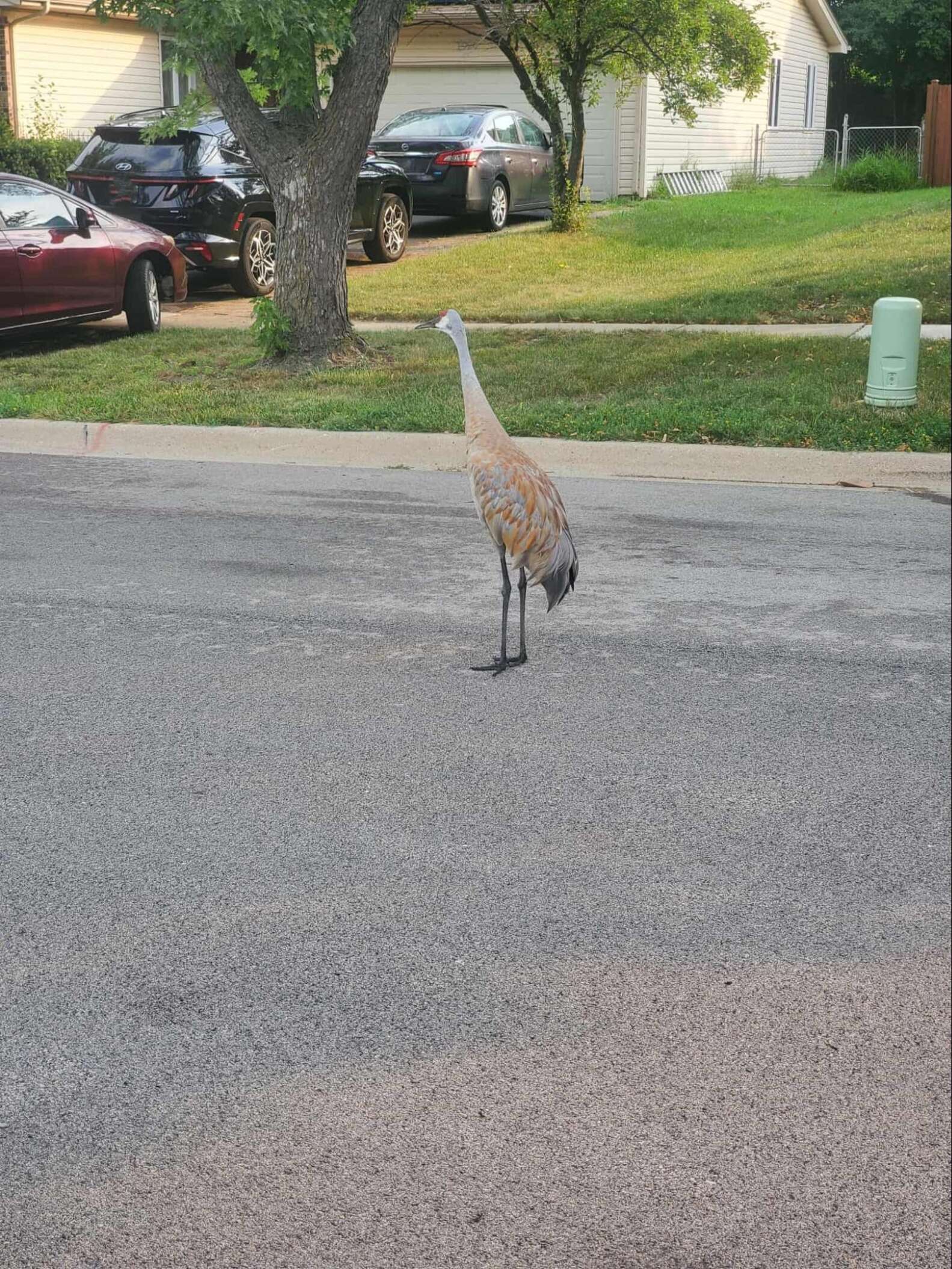
“He actually walked toward me,” Schwager said. “It was surreal. My brain said, ‘Nope, this isn’t really happening.’”
As she backed away from the crane, he started following her. “I walked very slowly, and out of the corner of my eye, I could see he was right behind me,” Schwager said. “He followed me into my yard and all the way home.”
Schwager’s home security system recorded the late-August close encounter.
“It was quite an experience having a bird nearly as tall as me right behind me with his huge beak,” Schwager said.
The friendly crane seemed content to hang out with Schwager, who wondered if he had gotten separated from his flock. “I looked in the park near the house to see if we could find his friends, but couldn’t see any other cranes,” she said.
In the fall and winter, sandhill cranes migrate from Canada and the northern United States to head back south, sometimes stopping in the Midwest.
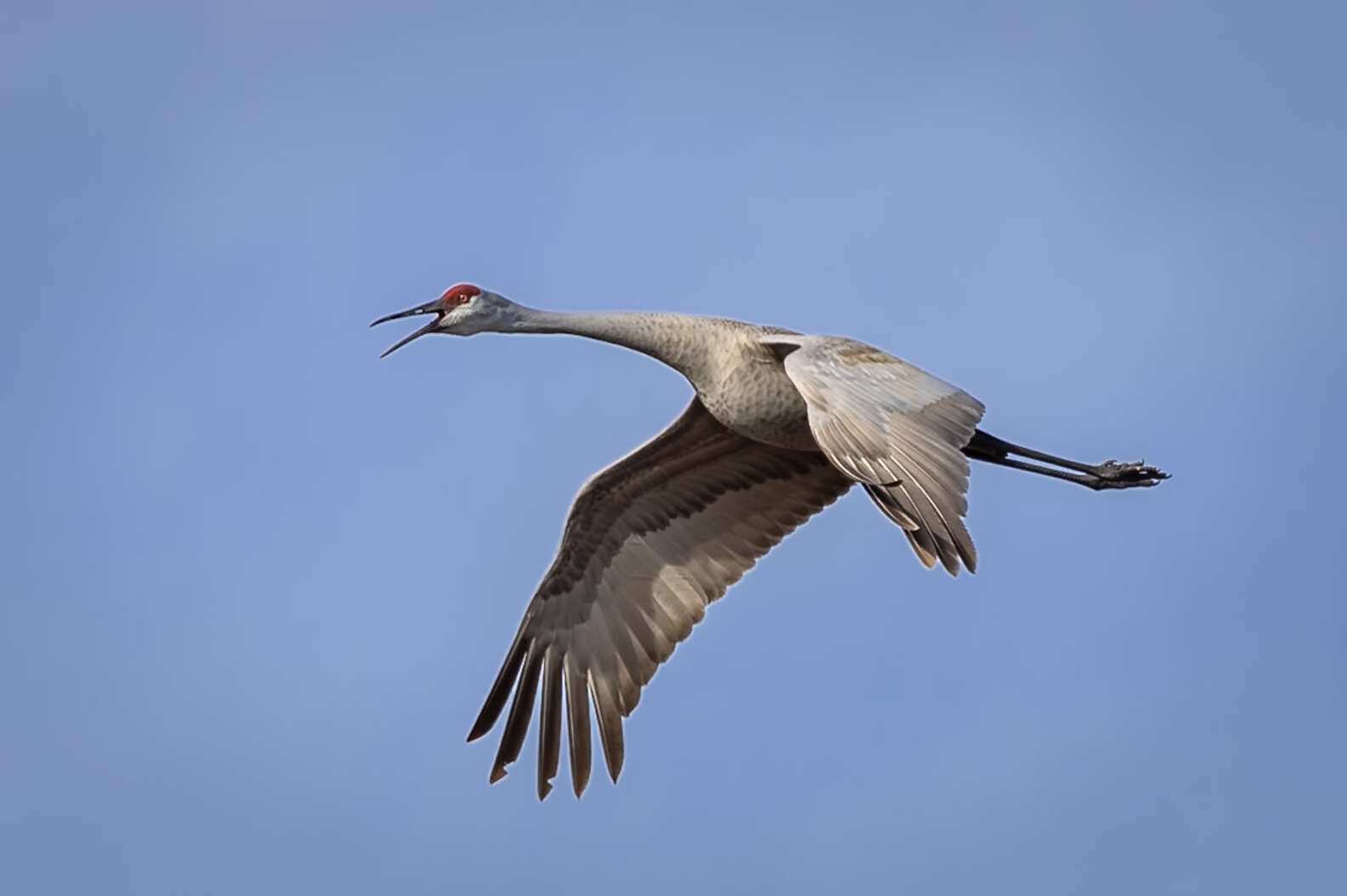
“The Chicagoland area is one of the southern areas of their breeding grounds,” Janice Culver, a naturalist with Crabtree Nature Center in Barrington Hills, Illinois, told The Dodo.
The video of the crane approaching and following Schwager is concerning to Culver: “What I saw was a bird that looks very comfortable around people,” she said. “It definitely tells us that someone is feeding the bird.”
Culver suspects the crane has grown accustomed to people and was hoping for a handout.
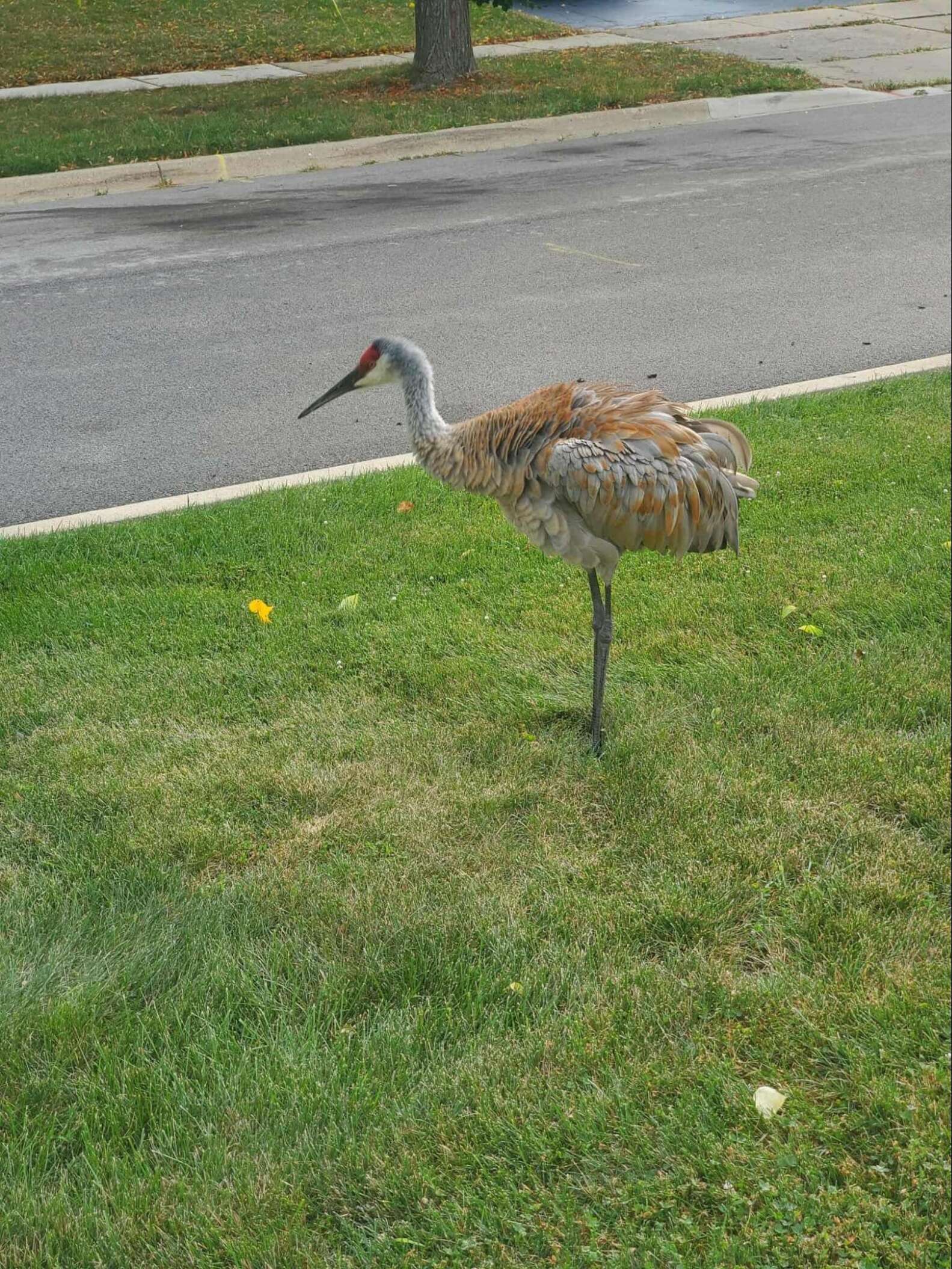
“That’s one of the biggest problems that we have with people and wildlife,” Culver said. “Once there’s a food source or something for the animal to get, they’re going to keep coming back.”
People feeding and having close encounters with any wildlife can put animals in danger.
“It might delay or change a crane’s migration pattern because they’re being fed. This also makes them more comfortable with humans, which could put them at risk of being hit by a car or harmed by a person or animal,” Culver said.
And, of course, approaching and interacting with any wild animal can be dangerous for people.
@namdinhmaitrongtim Ad lần đầu tiên thấy 🦀 lột – còn các bạn thì sao đã được xem chưa nhỉ 🤗#xuhuongtiktok