At first glance, wasp and hornet nests look a lot alike. Both may hang from eaves, tree branches, or other sheltered spots, and both belong to stinging insects you definitely want to avoid. But the two types of nests differ in materials, design, and the behavior of the insects that build them. They also vary in how dangerous they can be. Learning to recognize those differences helps you know when to steer clear and when to call pest control.
Identifying Wasps
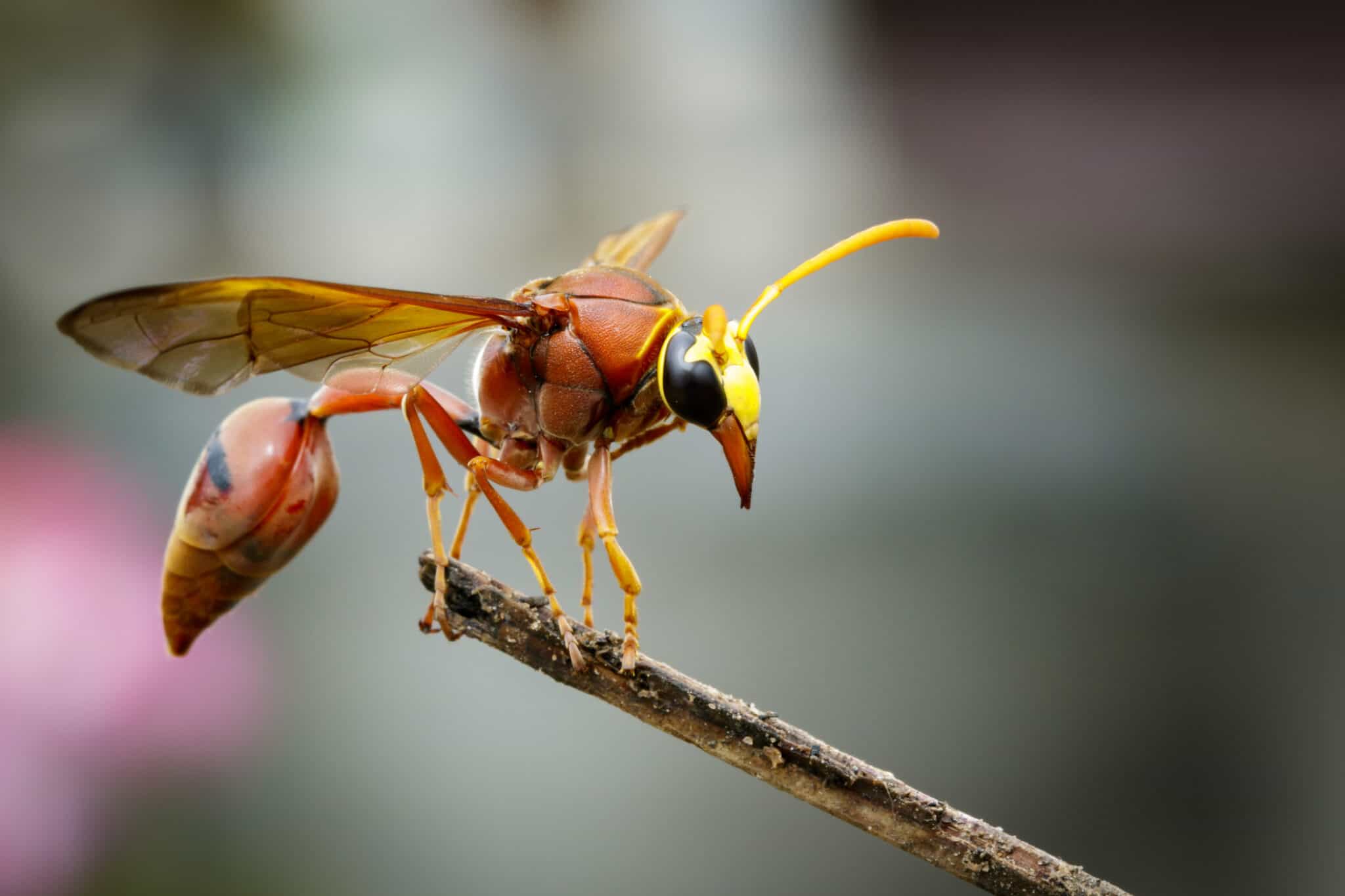
Wasps can be identified by their sleek, slender bodies and narrow “waists” that separate the thorax from the abdomen. Their exoskeletons are smooth and shiny, with bold colors like black, yellow, or reddish brown, sometimes with bright striping that gives them a sharp, metallic look. Unlike the rounder, fuzzier bees, wasps appear polished and aerodynamic. They also have long legs that dangle noticeably in flight, curved antennae, and two pairs of narrow, folded wings. Paper wasps are the most common type people encounter near homes and gardens; they have an open, umbrella-like nest and can often be seen gliding slowly around rooflines or shrubbery.
Behavior is another giveaway. Wasps tend to be active hunters, searching for caterpillars, flies, and other insects to feed their larvae. You’ll often see them hovering close to flowers, picnic tables, or trash bins, drawn by sweet scents or meat scraps. While they can sting repeatedly, they usually won’t attack unless they feel their nest is threatened or they’re swatted at. Compared to bees, they’re faster, more agile, and visibly curious about their surroundings, often circling a person or object before deciding to move on.
Identifying Hornets
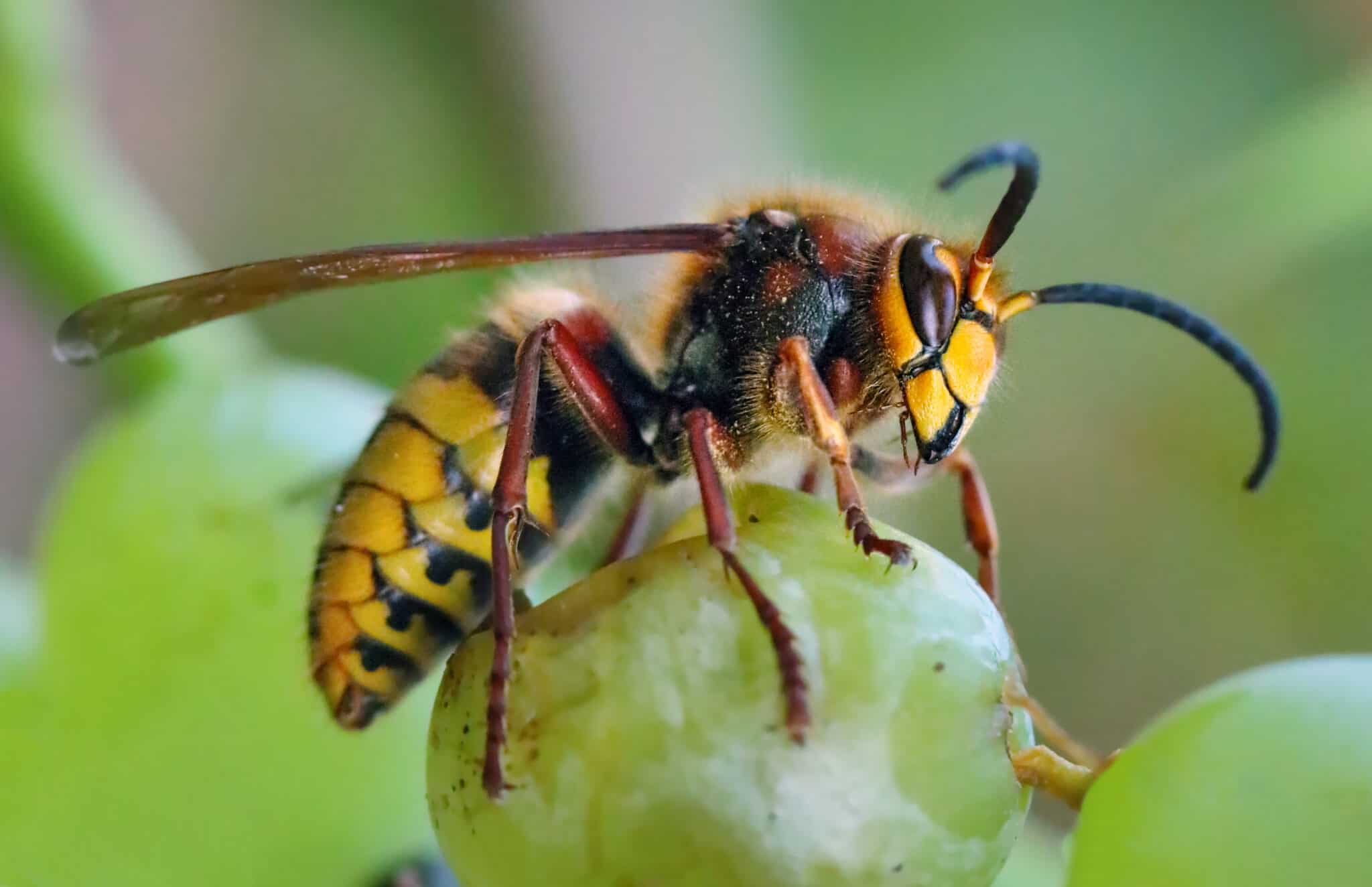
Hornets are bigger and bulkier than regular wasps, with thick bodies, broad heads, and big jaws that make them look built for business. Their colors are bold—usually deep brown and yellow or sharp black and white—and their smooth shells shine in the light. Their wings are shorter but powerful, beating fast enough to make a low, steady hum when they fly. They look heavier and more deliberate than paper wasps, moving with a kind of slow, confident purpose.
Behavior-wise, hornets are calm until they’re not. They’re social insects with large colonies and will fiercely defend their nests if they think you’re getting too close. When left alone, though, they’re busy hunters, taking down flies, caterpillars, and other insects to feed their young. If you observe from a distance, you’ll see they’re less about aggression and more about keeping their territory under control.
How Dangerous Are They?

Both wasps and hornets can be dangerous, but mostly when they feel threatened. Their stings are painful and can cause redness, swelling, and soreness that lasts a few hours or more. Hornets tend to be more aggressive than most wasps and will defend their nests as a group, which means multiple stings are possible if you get too close. But if you stay calm, still, and a good distance away, they will not bother you.
The real risk comes if someone is allergic to their venom; then even one sting can trigger a serious reaction that needs medical attention right away. People who are allergic to insect stings usually carry an epinephrine auto-injector to stop severe allergic reactions. Using it right after a sting can help prevent dangerous symptoms like throat swelling, difficulty breathing, or a sudden drop in blood pressure.
Wasp Nests
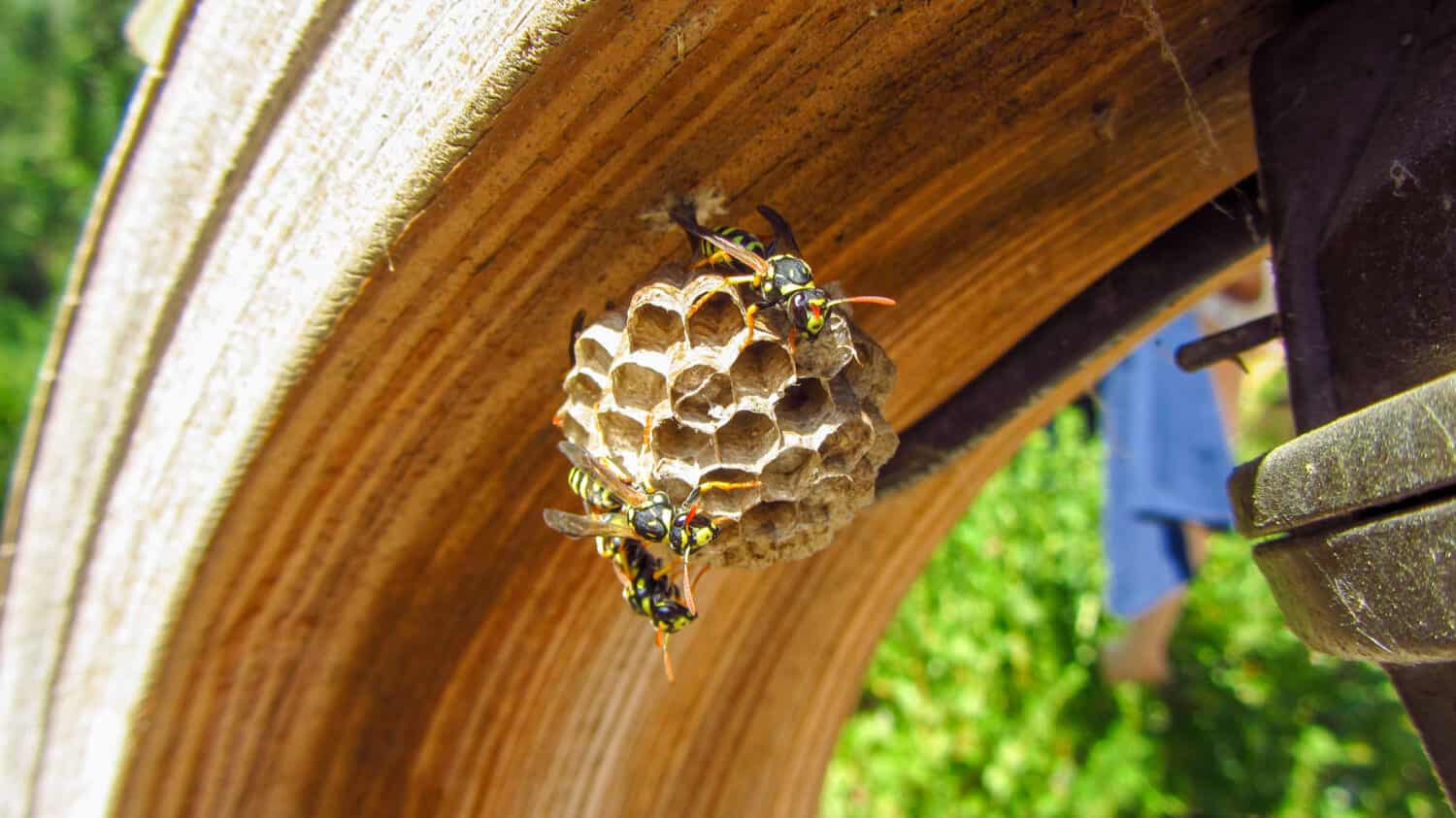
Paper wasps (Polistes species) are the ones most often seen near houses and yards. Their nests are open-faced and resemble an upside-down umbrella. Each exposed cell holds a larva. The nests are made from plant fibers chewed up and mixed with saliva, which dries into a papery material. The result is usually light gray or tan, matching the weathered plant fibers. Wasps suspend their nests from horizontal surfaces such as porch ceilings, tree branches, or rafters. The open underside lets the adults care for larvae quickly while staying alert to defend the colony if threatened. Most nests measure three to six inches across, but larger colonies can build nests more than ten inches wide.
Hornet Nests
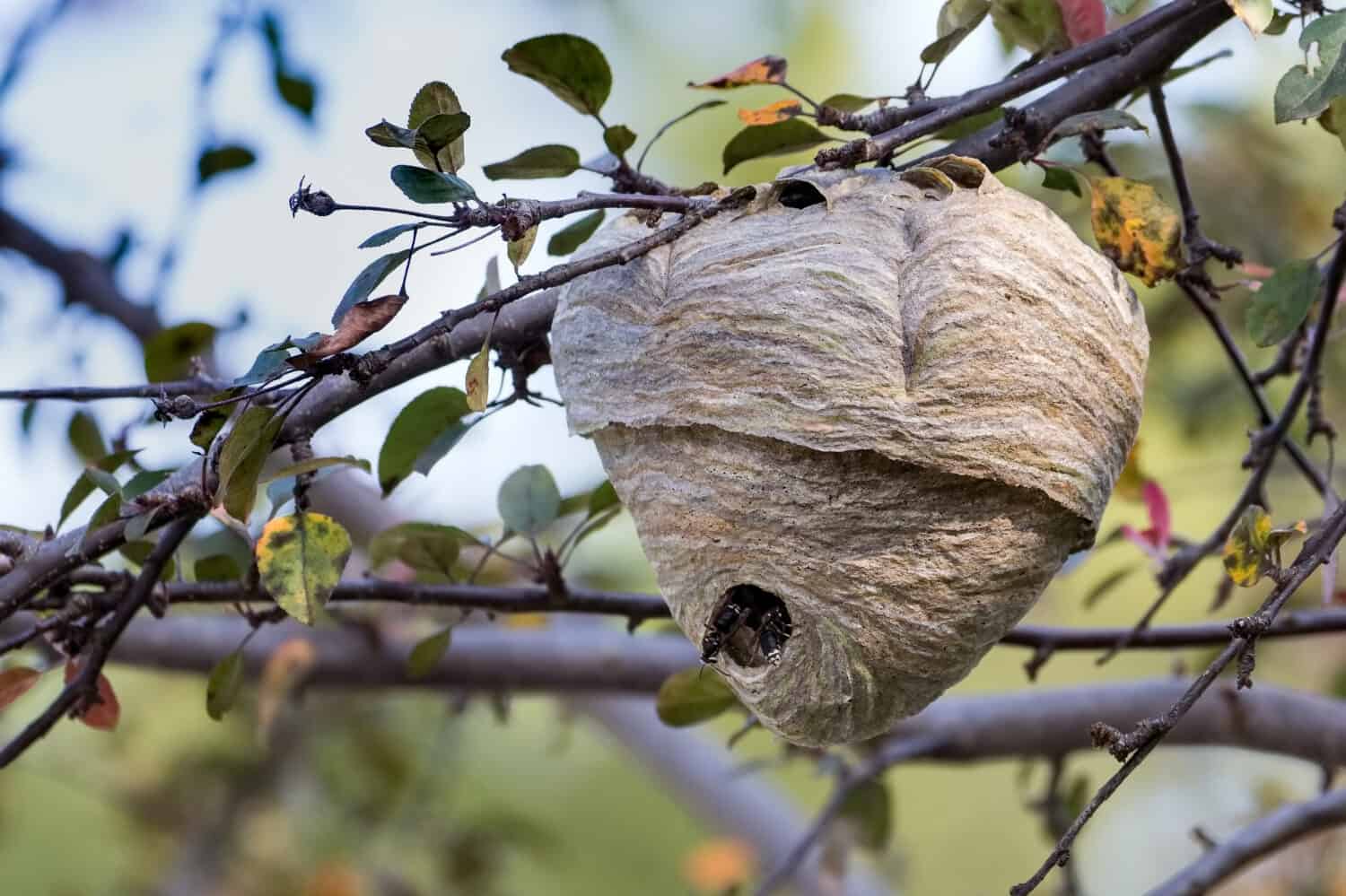
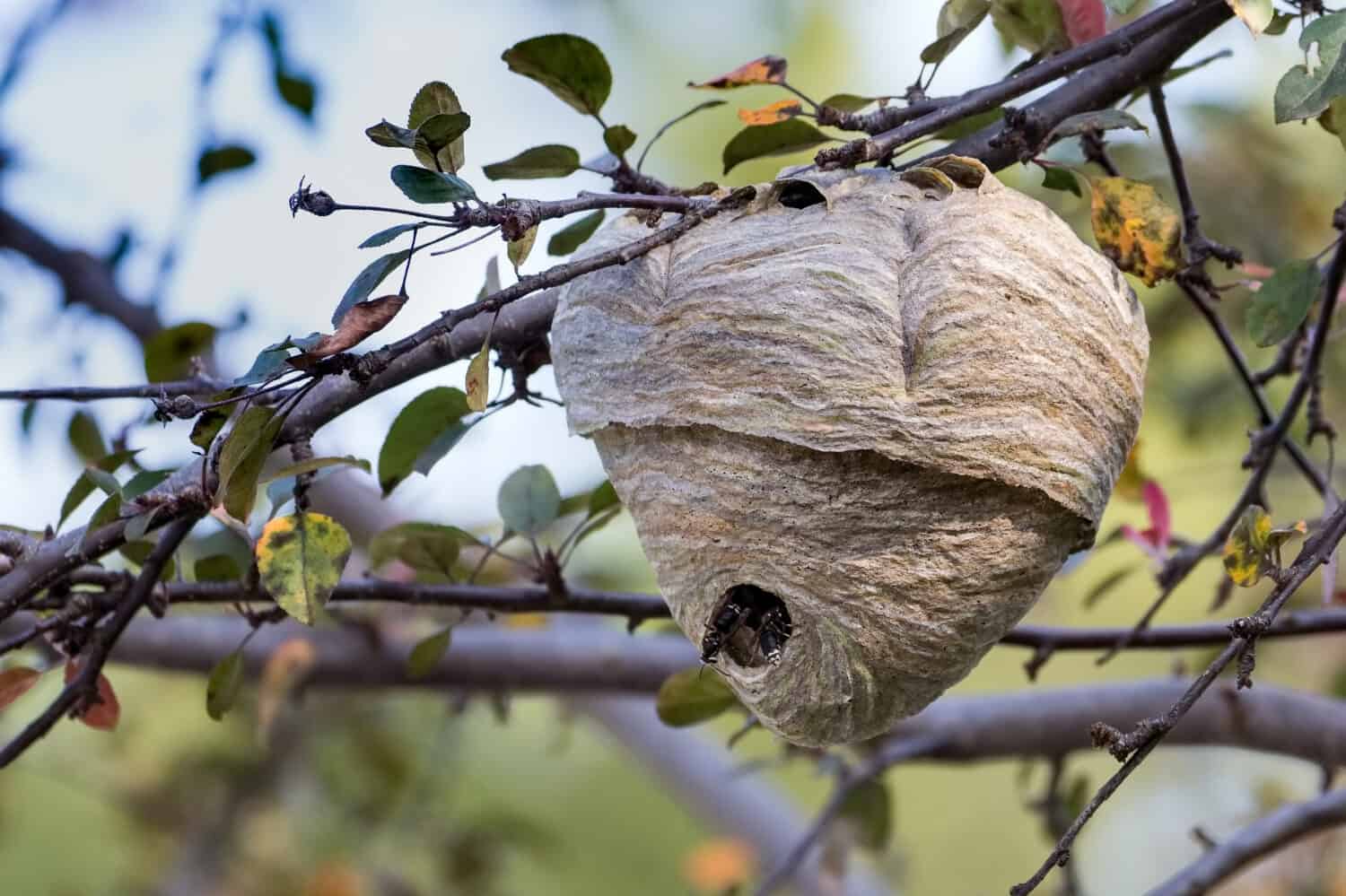
Hornets, such as the European hornet (Vespa crabro) or bald-faced hornet (Dolichovespula maculata), build enclosed nests that can grow to the size of a basketball. The outside is smooth and layered, fully wrapping the comb inside. Like wasps, hornets use chewed plant fibers, but they arrange them into overlapping sheets that form a weather-resistant shell.
Hornet nests have a single entrance hole, usually near the bottom. This design keeps out rain and wind while making defense easier. The nest often shows gray and brown striping from the layered pulp. Hornets usually build high in trees, inside wall voids, or on tall overhangs. Experts note that these nests are sometimes hidden in foliage and go unnoticed until they’re already large.