Zebra Snake Amazing Facts
- A zebra cobra can spit venom up to nine feet!
- Zebra snakes can live more than 12 years!
- A zebra snake baby hatches at around a foot long!
- Though they are very dangerous, a zebra snake will usually not bite unless it is cornered.
- Though they rarely do so, zebra snakes can bite as well as spit venom.
Evolution and Origins
The zebra spitting cobra is a venomous snake that is indigenous to Africa and can be located in central parts of Namibia, Angola, and Western and Northern Cape provinces of South Africa, living in habitats such as rocky, shrubland, and savanna areas.
The species is indigenous to the arid regions of southern Africa and is mostly active during the night, frequently discovered while crossing roads after dark.
The African zebra snake can be located in the southern regions of Africa such as Namibia, Angola, and South Africa, and it can inhabit various environments such as shrublands, deserts, rocky terrains, and savannas.
Where To Find the Zebra Snake

The African zebra snake can be found all over the southern parts of Africa, including in Namibia, Angola, and South Africa. These spitting cobras may live in shrublands, deserts, rocky areas including mountains and cliffs, and also in the savanna. Western barred spitting cobras can be found on or under rocks, hanging in or climbing trees, swimming in bodies of water, or hiding in tall grasses.
Scientific Name

The scientific name for the zebra snake, or western barred spitting cobra, is N. Nigricincta. “Naja” means cobra and “nigricincta” means black in Latin. There is some debate as to whether they are a subspecies of the Black-necked Spitting Cobra, Naja nigricollis whose name means “blackfish cobra.”
Population and Conservation Status

According to the ICUN Redlist, the African zebra snake is listed as being of Least Concern. Their population is listed as stable and they have few if any natural threats and none determined by the ICUN. They were last assessed for the Red List in 2019.
Appearance and Description
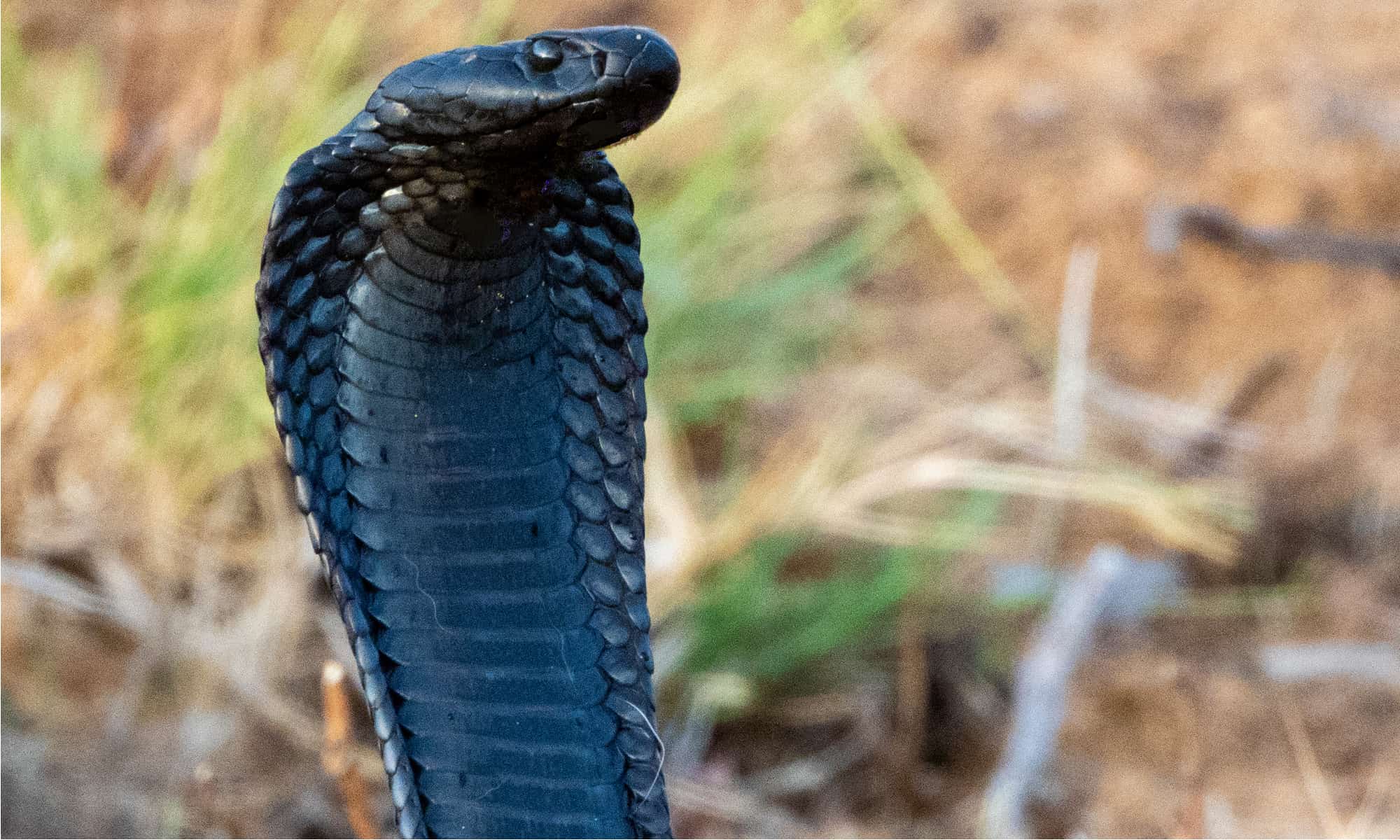
A fully grown zebra snake is approximately four feet in length, but a baby zebra snake is born a foot long, so their size may not help identify them. The zebra snake is most easily identified by its black cobra hood and the stripes from which it gets its name, black and white “zebra” stripes which band the length of the zebra cobra’s body.
The head and hood of the zebra snake are both solid black, with no white stripes or bands.
MORE INTERESTING FOR YOU
View on Threads
View on Threads
View on Threads
View on Threads
View on Threads
View on Threads
View on Threads
View on Threads
View on Threads
View on Threads
View on Threads
View on Threads
View on Threads
View on Threads